


What ARO Chicago Apartments Are and Why They Matter
ARO Chicago apartments are housing units integrated into residential developments across the city. These units look identical to other apartments in the same building but are part of the city’s inclusionary zoning requirements, designed to ensure that new developments contribute to a mix of housing options within the community.
Quick Facts About the Program:
- Purpose: Support mixed-income, integrated communities through inclusionary zoning requirements
- Eligibility: Households meeting specific program criteria
- Duration: Units must remain in the program for 30 years
- Quality: Indistinguishable from other units in the same building
- Application: Apply directly through property managers, not the city
Understanding how ARO works requires navigating application processes and eligibility requirements. The program has evolved significantly, with major updates in 2015 and 2021 that expanded requirements and clarified compliance.
Understanding the Mechanics of ARO Chicago Apartments
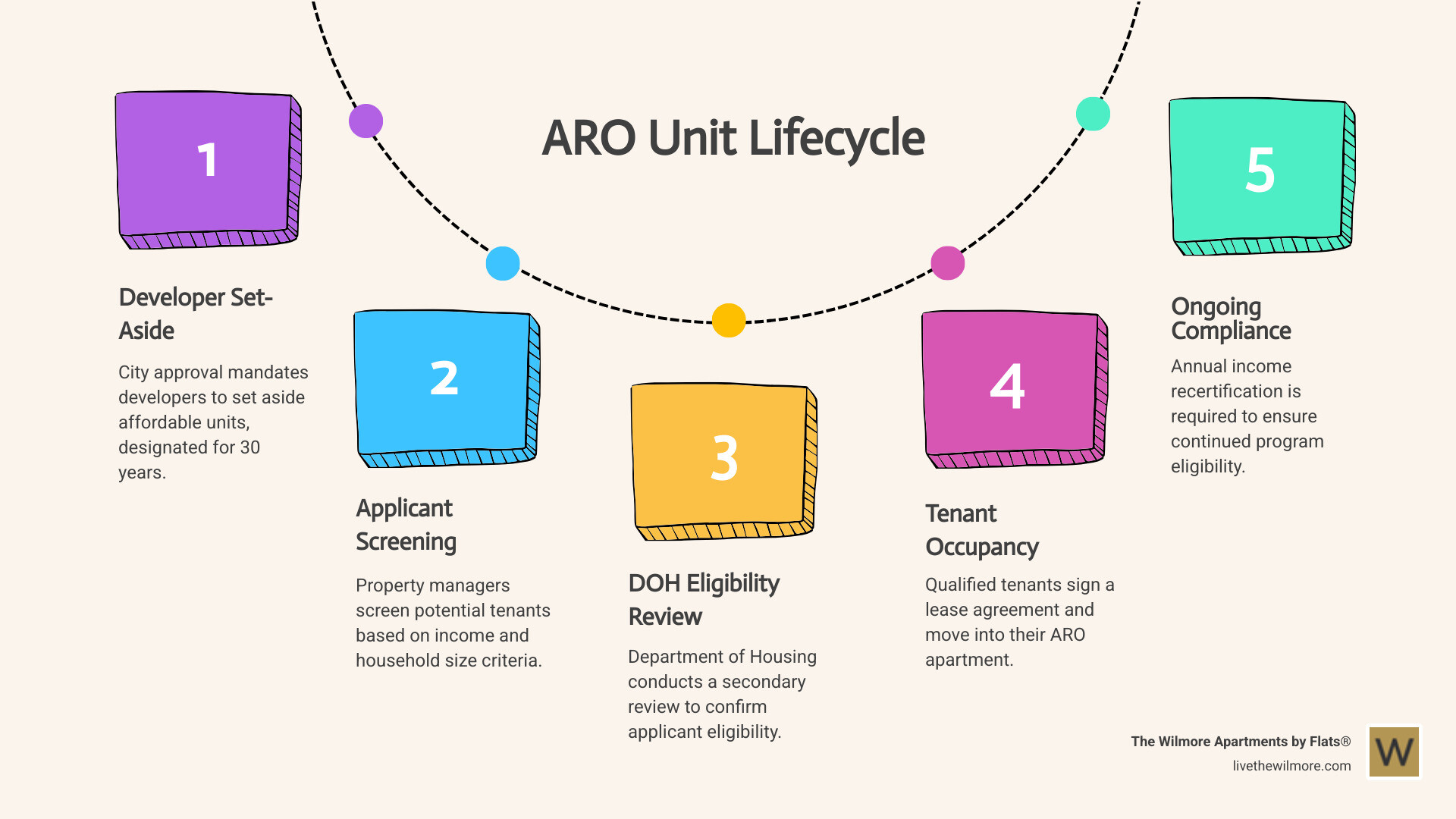
The ARO is a cornerstone of Chicago’s inclusionary housing policy. Managed by the Chicago Department of Housing (DOH), the ordinance mandates that residential developments receiving certain city benefits—such as a zoning change or the purchase of city-owned land—must set aside a percentage of units for residents.
Under the current Chapter 2-44-085 (the 2021 ARO), the city has strengthened its commitment to long-term community growth. Unlike some programs that only offer short-term solutions, ARO units are required to remain within the program for a 30-year period. This ensures that as neighborhoods grow and change, the community remains diverse and accessible to a wide range of residents.
For residents, the "mechanics" mean that these units are integrated seamlessly into the fabric of the development. When you walk through the lobby or head to the rooftop lounge, there is no distinction between those in program units and those in other units.

Evolution of the ARO Chicago Apartments Program
The ARO has come a long way since its inception. The Chapter 2-44-080 (the 2015 ARO) laid much of the groundwork, applying to developments that received approval prior to October 2021. Under the 2015 rules, developers often had more flexibility to contribute to a housing fund instead of building units on-site.
However, the 2021 updates shifted the focus toward building units directly in the neighborhoods where development is happening. This update increased the required percentage of units in many areas and emphasized "Pilot Areas"—specific zones like the Milwaukee Corridor or Near North/Near West—where the need for integrated housing was most acute. While some pilot programs have expired or been absorbed into the 2021 ordinance, their legacy lives on in the increased number of ARO Chicago apartments available today.
The Role of the Chicago Department of Housing (DOH)
While you will interact primarily with property managers, the Chicago Department of Housing (DOH) acts as the ultimate gatekeeper and auditor of the program. Their role is twofold: ensuring developers follow the law and verifying that applicants truly meet the program requirements.
Once a property manager reviews your initial application, they submit your file to the DOH for a secondary review. This step is crucial; the DOH typically processes these reviews within 10 business days. They check for compliance with the Municipal Code. You can learn more about the city's oversight on the official Home page for the ordinance.
Eligibility and Documentation for Program Units
Eligibility for ARO Chicago apartments is primarily determined by two factors: household size and gross annual income. The program uses Area Median Income (AMI) guidelines, which are updated annually.
Most rental units are targeted at the 60% AMI bracket. However, the program can include various brackets.
For example, a A2 60 AMI ARO unit would be reserved for a household whose total income does not exceed the 60% threshold for their specific household size.
Qualifying for ARO Chicago Apartments
Qualifying goes beyond just a single paycheck. The property manager will look at your household composition—essentially, who will be living in the unit with you. This is important because a B1 60 AMI ARO unit might have different occupancy requirements than a studio.
The certification process also involves asset verification. This doesn’t mean you can’t have savings; it means interest or dividends earned from those assets may be counted toward total annual income.
Required Documentation for Applicants
Preparing your paperwork is typically the most time-consuming part of the process. Because the DOH requires a high level of documentation, applicants are generally asked to provide records that support the information in the application.
Common documents include:
- Paystubs: Usually the last 3–6 months of consecutive stubs.
- Bank Statements: Recent statements for all checking and savings accounts.
- Tax Returns: Federal returns (1040s) from the most recent year, including W-2s or 1099s.
- Asset Information: Documentation of 401(k)s, IRAs, or stocks.
- Benefit Letters: If applicable, a current award letter may be required.
Specific floor plans, such as the C7 60 AMI ARO, may require the full suite of documentation before a lease can be drafted.
How to Steer the Application Process
Navigating the application for ARO Chicago apartments is a bit like a standard apartment hunt, but with a few extra steps. The most important thing to remember is that the City of Chicago does not own these buildings. You do not apply at City Hall; you apply directly with the leasing office of the building you like.
The process generally follows these steps:
- Inquiry: Contact the property and ask specifically about ARO availability.
- Initial Screen: The property manager checks if you meet the program criteria.
- Full Application: You submit your documentation and pay any standard application fees.
- DOH Review: The manager sends your file to the city for final approval.
For a detailed walkthrough, the city provides a guide For Prospective Renters that explains the "wet signature" requirements and the 10-day review window.
Finding Available Units via the ARO Map
Since there is no single "master list" of vacant units that updates in real-time, the best tool at your disposal is the Open ARO Rental Buildings Map. This interactive map allows you to see every building in the city that contains ARO units.
When you click on a data point, you'll find the property’s address and contact information. From there, it is up to you to reach out. Some units might have a waitlist, so it pays to be proactive and check back often.
Living in an Ordinance-Compliant Community
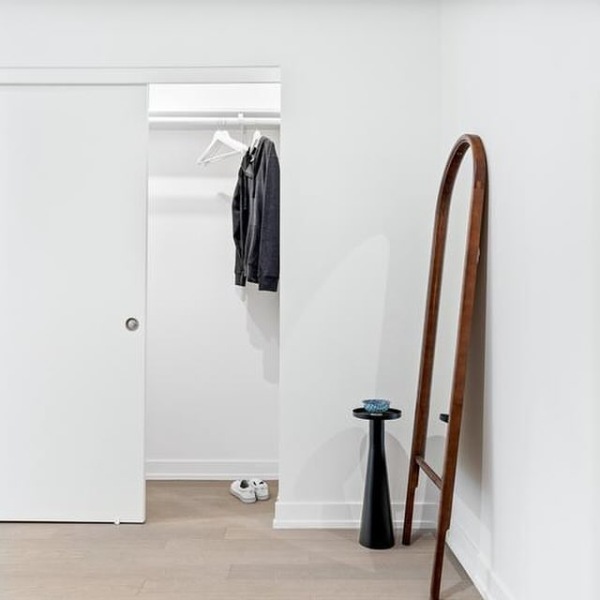
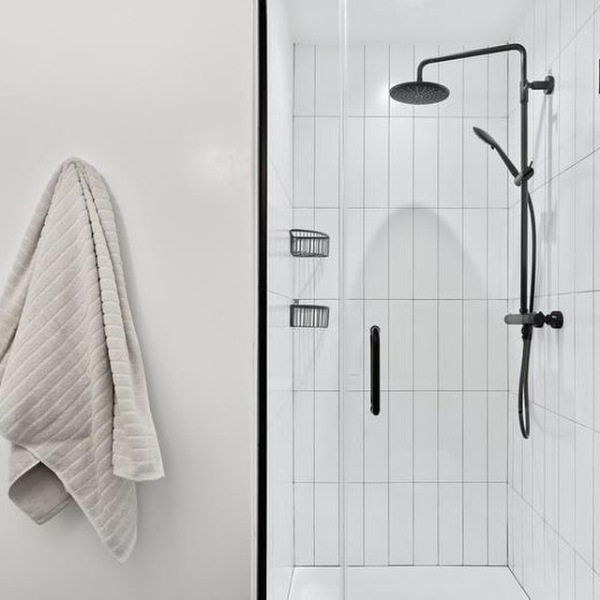
One of the best parts about the ARO program is that it prioritizes inclusion. The units are "indistinguishable" from others in the building. This means residents have the same finishes and access to building amenities and services as other residents.
Living in these communities also means enjoying modern perks. Whether it’s a program unit or a standard studio, residents are part of a modern residential environment. The community maintains a two-pet limit per apartment to support a comfortable environment for all residents. You can view various layouts on the Floor Plans page to see how the ARO units fit into the building’s design.
Rights of Program Tenants
ARO tenants have the same rights as any other renter under Chicago’s Residential Landlord and Tenant Ordinance (RLTO). Information handling practices can be reviewed in the Privacy Policy.
ARO Chicago apartments and Neighborhood Integration
The ARO program supports neighborhood integration by placing units within new and existing developments across the city, including high-growth areas like Uptown or the West Loop. This approach helps create communities where residents with a range of occupations can live in proximity to where they work and spend time.
Frequently Asked Questions about ARO
How long do units remain in the program?
Under the 2021 ordinance, units are typically required to remain in the program for a period of 30 years. This long-term commitment helps the housing market and ensures that options remain available over time.
Can I apply to multiple buildings at once?
Yes! In fact, we encourage it. Because ARO units are highly sought after and often filled on a first-come, first-served basis, applying to multiple properties increases your chances of securing a home. Just keep in mind that you will need to provide a fresh set of documentation for each property manager’s file.
Conclusion
Finding the right home in Chicago can take time. At The Wilmore Apartments by Flats®, the community participates in the ARO program and offers modern living in Uptown Chicago, with contemporary amenities and convenient access to the city.
Whether you are looking for a studio or a one-bedroom, you can explore finishes and features throughout the community. Learn more and Explore apartments with quartz countertops to see available options in Uptown.