


Why High-End Kitchen Surfaces Matter
High-end kitchen surfaces are the cornerstone of a truly exceptional kitchen, combining stunning aesthetics with performance that stands up to daily use. Here's what defines a luxury countertop:
- Engineered Quartz - Non-porous, low maintenance, consistent color and pattern
- Granite - Natural beauty with unique patterns, heat resistant, requires sealing
- Marble - Classic elegance with distinctive veining, develops character over time
- Quartzite - Marble-like beauty with granite-level durability
- Porcelain/Sintered Stone - Ultra-durable, heat and UV resistant, available in slim profiles
- Soapstone - Soft, velvety texture, naturally non-porous, heat resistant
The kitchen countertop takes a beating. It's where you chop vegetables, set down hot pans, wipe up spills, and gather with friends. That's why selecting the right surface matters so much.
A truly luxurious countertop isn't just about looks. It's about finding a material that performs under pressure while elevating your space. The best surfaces resist stains, scratches, and heat while making a visual statement that defines your entire kitchen.
Whether you're drawn to the timeless veining of natural marble or the consistent beauty of engineered quartz, understanding what makes these materials special helps you choose a surface that works for your lifestyle. Some materials develop a rich patina over time. Others maintain their day-one appearance for decades with minimal effort.
The right countertop becomes more than a work surface. It's a conversation starter, a design anchor, and a daily reminder of quality.
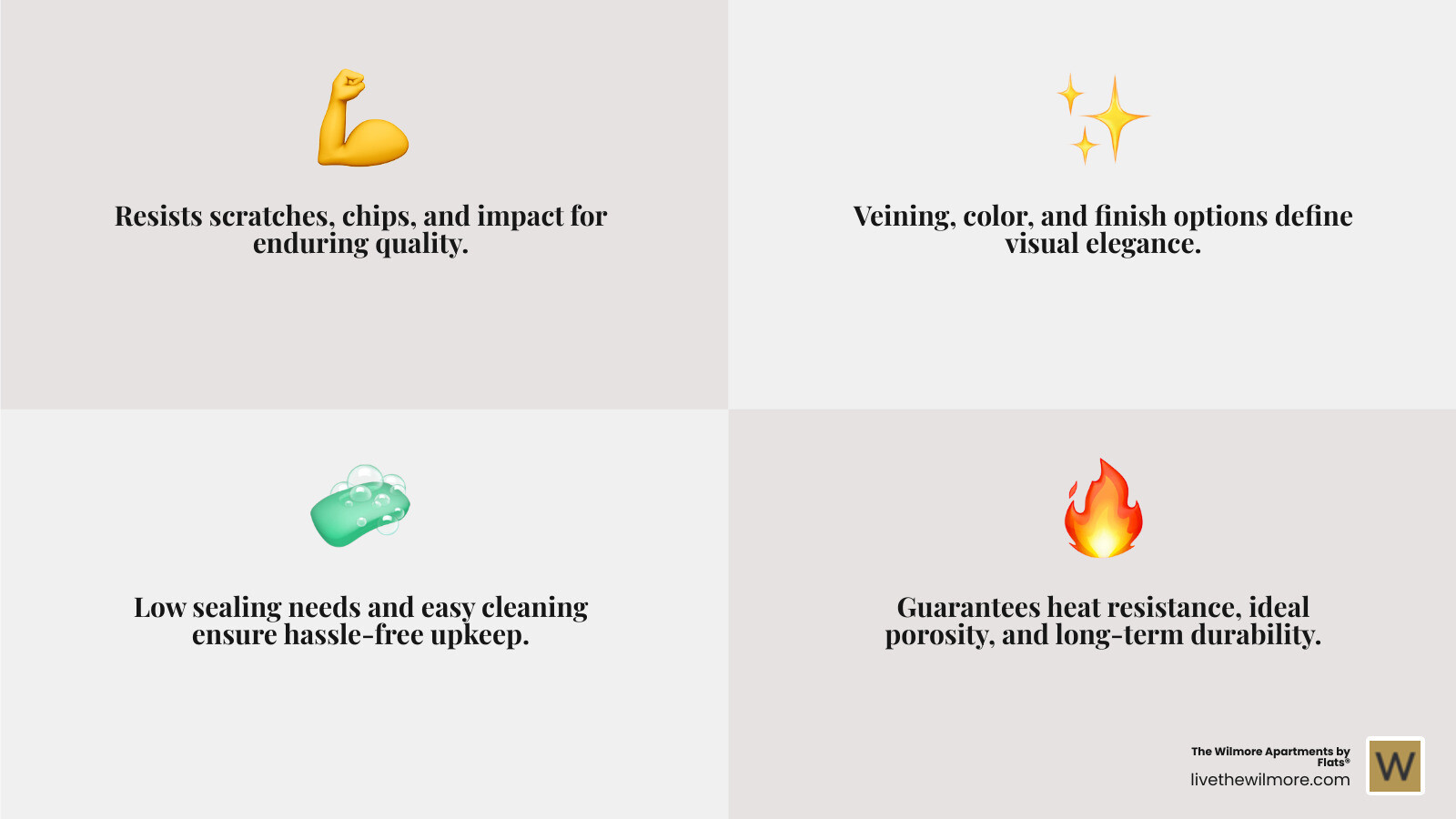
Key Characteristics of a Luxury Countertop
When we start on the journey of selecting high-end kitchen surfaces, several key characteristics guide our choices, ensuring both enduring beauty and practical functionality. These factors are crucial in determining how a countertop will perform and integrate into our daily lives.
Durability is paramount. A luxury countertop should be able to withstand the rigors of a busy kitchen, resisting impacts, chips, and daily wear and tear. We want a surface that will look pristine for years to come, reflecting the quality investment we've made in our home.
Scratch resistance is another critical feature. From sliding pots and pans to accidental knife slips, our kitchen surfaces face constant threats. A highly scratch-resistant material ensures that our countertops retain their flawless appearance without showing the marks of everyday use.
Heat resistance is essential for any kitchen. The ability to safely place hot cookware directly onto the surface without causing damage or discoloration provides peace of mind and convenience. While trivets are always recommended as a best practice, a high heat resistance offers an extra layer of protection.
Stain resistance protects against spills from wine, coffee, oils, and acidic foods. A non-porous surface or one treated to repel liquids will prevent unsightly stains from setting in, making cleanup a breeze and preserving the countertop's original beauty.
Porosity directly relates to stain resistance and hygiene. Highly porous materials can absorb liquids, leading to staining and potentially harboring bacteria. Non-porous or low-porosity materials are generally easier to clean, more hygienic, and less prone to staining.
Maintenance requirements vary significantly between materials. Some luxury options demand regular sealing and meticulous care, while others are virtually maintenance-free. Our lifestyle and willingness to commit to upkeep often dictate the most suitable choice. A low-maintenance surface can be a true luxury, freeing up time and effort.
Finally, the aesthetic impact is undeniable. A luxury countertop is a focal point, setting the tone for the entire kitchen. Its color, pattern, finish, and overall visual appeal must align with our design vision and personal style, creating a space that is both inviting and inspiring.
To help visualize these differences, here's a quick comparison:
| Characteristic | Natural Stone (e.g., Marble, Granite) | Engineered Stone (e.g., Quartz, Porcelain) |
|---|---|---|
| Porosity | Varies (Marble: high, Granite: medium, Quartzite: low) | Very low to non-porous |
| Heat Resistance | Generally high, but can vary; some may etch or scorch | High, but extreme heat can cause damage |
| Maintenance | Often requires periodic sealing; specific cleaning needs | Low maintenance; no sealing required; easy to clean |
| Aesthetics | Unique, natural patterns; organic variations | Consistent patterns/colors; can mimic natural stone; wide variety |
| Durability | Very durable (Granite, Quartzite); softer (Marble, Soapstone) | Extremely durable; highly resistant to scratches and impacts |
Exploring the World of High-End Kitchen Surfaces
This section introduces the most sought-after materials that blend performance with unparalleled beauty, perfect for creating a statement in any kitchen.
Natural Stone: Timeless High-End Kitchen Surfaces
Natural stone countertops bring an unparalleled sense of history, grandeur, and unique beauty to any kitchen. Each slab is a one-of-a-kind work of art, formed over millennia, offering patterns and colors that cannot be replicated.
Granite Granite has long been a hallmark of luxury, celebrated for its unique patterns and robust nature. It's an igneous rock, formed from cooling magma, resulting in a dense and hard surface. We appreciate granite for its exceptional durability and impressive heat resistance, making it a practical choice for busy kitchens. While highly durable, granite is naturally porous, meaning it typically requires periodic sealing to prevent stains. This maintenance ensures its beauty endures, protecting against spills and maintaining its luster.

Marble For those seeking classic elegance, marble is an irresistible choice. Its distinctive veining and soft, luminous appearance have graced opulent kitchens for centuries. Marble is a metamorphic rock, formed under intense pressure, giving it its characteristic beauty. While softer and more porous than granite, many homeowners accept marble's tendency to develop a beautiful patina over time, which tells the story of the kitchen's life. This natural aging process adds to its charm, making each countertop truly unique. However, we must consider its porosity, as it can be more susceptible to etching from acidic liquids. Regular sealing and prompt cleanup are key to preserving its allure. To learn more about the timeless appeal of natural stone, explore Natural stone for kitchen countertops.
Quartzite Quartzite is a rising star in high-end kitchen surfaces, offering the best of both worlds: the aesthetic appeal of marble with the resilience of granite. This metamorphic rock is formed from quartz-rich sandstone, making it incredibly hard. It boasts a marble-like aesthetic with stunning veining and subtle coloration but comes with granite-like durability. Quartzite registers high on the Mohs hardness scale, making it highly resistant to scratches and acids. Its low porosity means it requires less frequent sealing than many other natural stones, offering a relatively low-maintenance option for a truly luxurious look.
Soapstone Soapstone stands out with its unique velvety feel and understated elegance. This natural stone is composed primarily of talc, giving it a soft, smooth texture. What we particularly love about soapstone is its non-porous nature, which makes it naturally resistant to stains and bacteria without the need for sealing. It's also remarkably heat resistant, allowing us to place hot pots and pans directly on its surface. Over time, soapstone develops a dark patina, deepening in color and character, which many find adds to its charm. Minor scratches can often be buffed out or blended in with mineral oil, contributing to its lived-in, yet sophisticated, appeal.
Engineered Stone: Modern High-End Kitchen Surfaces
Engineered stones represent the pinnacle of modern material science, offering exceptional performance, consistent aesthetics, and often lower maintenance than their natural counterparts. These materials are designed to meet the demands of contemporary living without compromising on style.
Quartz Engineered quartz is one of the most popular high-end kitchen surfaces for a reason. Composed of approximately 90-95% ground quartz minerals combined with polymer resins and pigments, it offers exceptional performance. Its primary advantage is its non-porous surface, which makes it highly resistant to stains and bacteria, eliminating the need for sealing. We also appreciate the consistency in color and pattern that quartz offers, allowing for a more uniform design aesthetic across large surfaces. This material is incredibly durable, resistant to scratches, and relatively low maintenance, requiring only simple cleaning with soap and water. Its versatility in design and robust functionality make it a top choice for luxury kitchens. Explore our apartments with quartz countertops to see this material in action.

Porcelain Porcelain, particularly in large slab formats often referred to as sintered stone, is another exceptional engineered option for high-end kitchen surfaces. Manufactured from a blend of natural minerals subjected to extreme heat and pressure, it creates an ultra-durable material. Porcelain countertops are virtually non-porous, making them incredibly resistant to stains, scratches, and heat. They are also UV resistant, meaning their colors won't fade even with prolonged exposure to sunlight, making them suitable for both indoor and outdoor kitchen applications. We love the option for slim profile options, which can create a sleek, minimalist aesthetic favored in modern designs. Porcelain is also known for being incredibly hygienic and easy to clean, making it a fantastic choice for busy kitchens. For more on durable options, see Best Countertops for Busy Kitchens.
Design Elements That Define a Luxury Aesthetic
Beyond the material itself, the way a countertop is designed and integrated into the kitchen space plays a crucial role in defining a luxury aesthetic. These elements lift a functional surface into a true work of art.
Veining and Patterns are fundamental to creating visual interest and depth. In natural stones like marble and quartzite, the unique, organic flow of veining can be breathtaking. We can improve this natural beauty through bookmatching, where two slabs are cut and polished to mirror each other, creating a stunning, continuous pattern that is truly bespoke. For a dramatic statement, waterfall edges extend the countertop material down the sides of an island or cabinet, creating a seamless, architectural look that screams sophistication.
Integrated sinks, crafted from the same material as the countertop, offer a sleek, seamless transition that is both visually appealing and highly hygienic. Similarly, full-height backsplashes that continue the countertop material up the wall create a cohesive and luxurious impression, drawing the eye and making the kitchen feel grander.
Finishes and Textures also contribute significantly to the luxury feel. A polished finish offers a high-gloss, reflective surface that improves the stone's colors and patterns, exuding classic elegance. Conversely, a honed finish provides a matte, soft look that is less reflective and can lend a more understated, contemporary vibe. For a unique tactile experience, a leathered finish offers a subtle texture, similar to soft leather, which can help hide fingerprints and smudges while adding character. Matte surfaces, in general, are gaining popularity for their modern, sophisticated appeal.
Color and Profile are the final touches that personalize the luxury aesthetic. Bold, dramatic colors or intricate patterns can make a powerful statement, becoming the undisputed focal point of the kitchen. Alternatively, neutral palettes offer timeless elegance and versatility, allowing other design elements to shine. The slim profiles of modern engineered materials can create a sleek, minimalist look, while thick, substantial slabs convey a sense of gravitas and enduring quality, reminiscent of classic European kitchens. The choice depends entirely on the desired style and how we envision our dream kitchen.
Sustainable and Eco-Conscious Choices
For those of us who value environmental responsibility as much as luxury, there are increasingly sophisticated high-end kitchen surfaces that offer both stunning aesthetics and eco-conscious benefits. These materials prove that sustainability doesn't mean compromising on quality or design.
Recycled Glass Recycled glass countertops offer a truly unique aesthetic that is both modern and playful. Made from post-consumer or industrial glass fragments embedded in a resin or cement binder, these surfaces boast remarkable durability. We love the way the embedded glass fragments catch the light, creating a shimmering, distinctive look that can range from subtle speckles to bold, colorful mosaics. This material is not only beautiful but also highly resistant to heat and stains, making it a practical choice for a busy kitchen. Choosing recycled glass is a direct way to support sustainability initiatives, changing waste into a functional work of art. For more on sustainable practices in materials, refer to Sustainability.
Sustainably Sourced Wood Wood, particularly in the form of butcher block, brings warmth, natural beauty, and a welcoming feel to the kitchen. When sourced sustainably, wood countertops are an excellent eco-friendly option. We appreciate the organic texture and rich grain patterns that develop over time, giving each surface a unique character. While wood is a natural material that adds a charming, rustic luxury, it does require consistent maintenance needs. Regular oiling and protection from excessive moisture and heat are essential to preserve its beauty and durability. Different wood types, like oak, maple, cherry, or walnut, offer varying hardness and aesthetic qualities, allowing for personalized choices.
Paper Composite Paper composite countertops are an innovative and often overlooked option for those seeking eco-friendly luxury. Crafted from recycled paper fibers infused with petroleum-free resins and then compressed under intense heat, these surfaces offer a surprising combination of strength and elegance. They possess a warm feel to the touch and a distinctive, matte appearance that can mimic natural stone or wood. We value their durability and non-porous nature, which makes them resistant to stains and bacteria, and relatively easy to maintain. Their eco-friendly composition makes them an attractive choice for homeowners looking to minimize their environmental footprint without sacrificing high-end design.
Frequently Asked Questions about Luxury Countertops
We understand that choosing the perfect high-end kitchen surfaces can lead to many questions. Here are some of the most common inquiries we receive:
What is the most durable high-end countertop?
When it comes to sheer durability, materials like quartzite and engineered options such as porcelain and quartz consistently rank at the top. Quartzite, a natural stone, is known for its exceptional hardness, often rating between 7 and 8 on the Mohs scale, making it highly resistant to scratches and impact. Engineered porcelain and quartz surfaces are also renowned for their robust construction, designed to withstand daily wear, heat, and impact, ensuring a long-lasting, pristine appearance.
What is the easiest luxury countertop to maintain?
Engineered quartz is widely considered the easiest luxury countertop to maintain. Its non-porous surface means it never requires sealing, unlike most natural stones. This characteristic makes it highly resistant to stains, spills, and bacterial growth, requiring only simple cleaning with mild soap and water for daily upkeep. Porcelain also offers similar low-maintenance benefits due to its non-porous nature and resistance to various chemicals.
Can you cut directly on granite or quartz?
While these high-end kitchen surfaces are incredibly hard and resistant to scratches, we strongly advise against cutting directly on them. Doing so can dull your knives very quickly. More importantly, although rare, it is still possible to scratch or chip the countertop surface with aggressive cutting, especially near edges or if a particularly hard impact occurs. To protect both your knives and your beautiful countertop, always use a cutting board.
Conclusion: Elevating Your Kitchen with the Perfect Surface
Choosing the ideal high-end kitchen surfaces is a journey of balancing timeless beauty with the demands of daily life. It's about finding a material that not only complements your overall design but also truly reflects your personal style and meets your functional needs. Whether you're drawn to the unique artistry of natural stone or the consistent performance of engineered materials, the right countertop is more than just a functional slab—it's a central element that defines your kitchen's character.
A well-chosen countertop is an investment in your home's character and functionality, enhancing both its aesthetic appeal and its practical usability for years to come. In our luxury apartments, we believe in providing spaces that embody this philosophy, offering both style and substance.
Find how exceptional design and quality finishes come together in our residences. Discover our apartments with quartz countertops.