


Why Luxury Countertop Materials Define Modern Kitchen Design
Luxury countertop materials transform kitchens from functional spaces into showstopping focal points that combine beauty with lasting performance. For urban professionals seeking the perfect balance of sophistication and practicality, understanding these premium surfaces is essential.
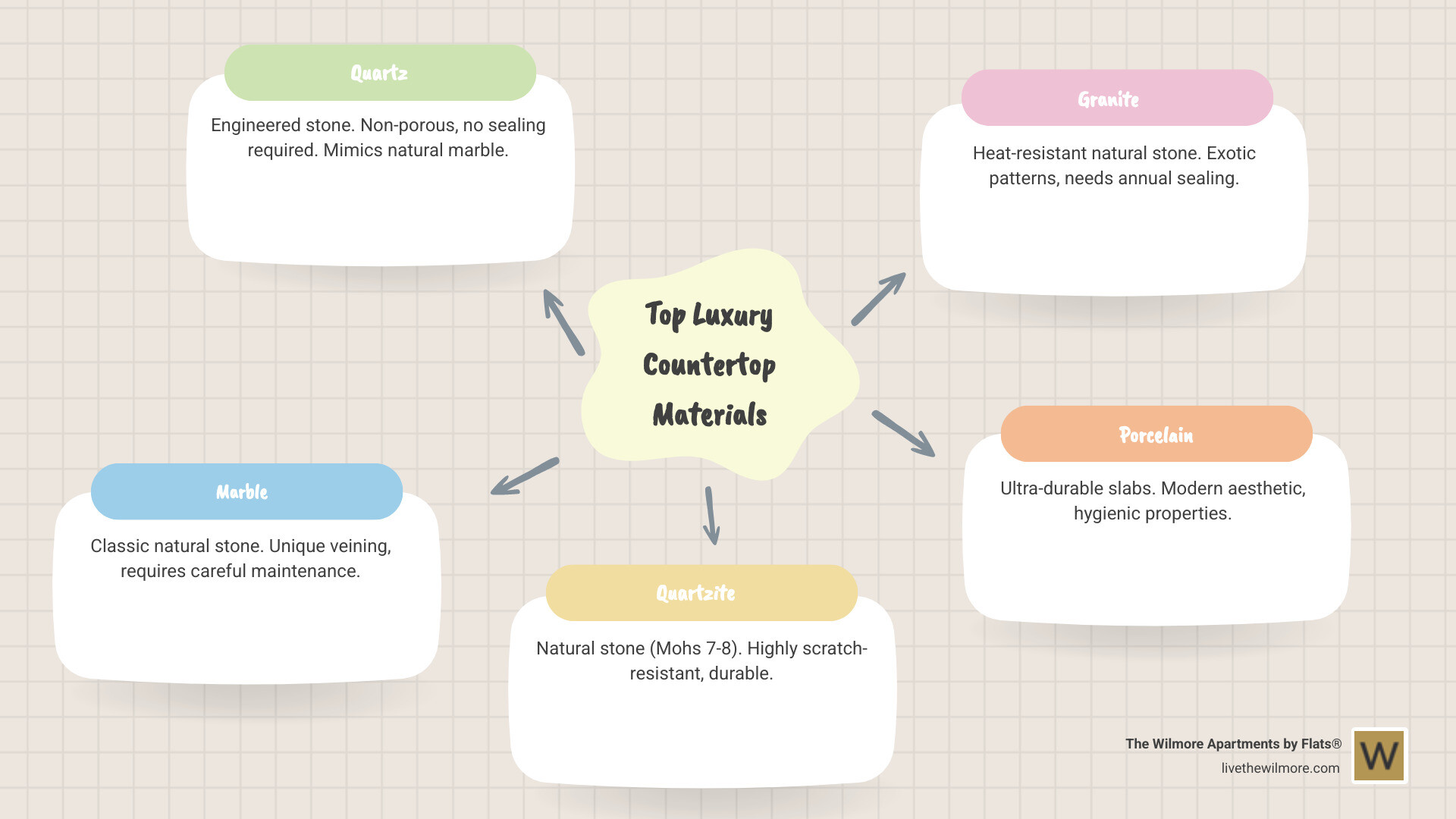
Top luxury countertop materials include:
- Quartz - Engineered stone that mimics natural marble without porosity or sealing requirements
- Marble - Classic natural stone with unique veining, requiring careful maintenance
- Quartzite - Natural stone ranking 7-8 on Mohs Hardness Scale, highly scratch-resistant
- Granite - Heat-resistant natural stone with exotic patterns, needs annual sealing
- Porcelain - Ultra-durable slabs with modern aesthetic and hygienic properties
What separates luxury materials from standard options? It comes down to three core qualities: exceptional durability, stunning visual impact, and long-term value retention. While granite has been associated with high-end kitchens for years, engineered stones like quartz now dominate the luxury market due to their non-porous nature and low maintenance requirements.
The fastest growing segment is porcelain, which appeals to those seeking a luxe modern aesthetic at a reasonable investment level. Meanwhile, natural stones like quartzite offer the elegance of marble with significantly more resilience—a crucial consideration for busy urban kitchens.
As one interior designer notes: "What defines a luxury countertop for me is the pattern. Bold movements, color contrast, and effortless flow create pieces of art."
Current trends lean toward matte and honed finishes rather than high polish, with darker tones like charcoal creating dramatic contrast against lighter cabinetry. Slimmer profiles are also gaining popularity, though they require strong materials like quartz or granite to maintain structural integrity.
The investment in high-quality countertops significantly boosts resale value, as kitchens remain focal points for prospective buyers. Materials that combine durability, easy maintenance, and timeless appeal deliver the highest return on investment.
Defining the Essence of Luxury Countertop Materials
When we talk about luxury countertop materials, we're not just referring to surfaces that come with a premium investment. We're describing materials that embody a superior blend of aesthetic grandeur, enduring quality, and intelligent design. These are the surfaces that lift a kitchen beyond mere utility, changing it into a centerpiece of the home.
What truly defines a luxury countertop material? It’s a combination of several key criteria:
- Exceptional Durability: A luxury countertop must be able to withstand the rigors of daily life without showing undue wear. This includes resistance to scratches, chips, and impact. For example, quartzite ranks very high in durability, followed closely by granite and quartz, while marble, despite its beauty, is less durable according to the Mohs Hardness Scale.
- Low Porosity: Many luxury materials, especially engineered ones like quartz and porcelain, are non-porous. This means they are impervious to liquids, highly resistant to staining, and inhibit the growth of bacteria, mold, and mildew. For natural stones, achieving low porosity often requires diligent sealing.
- Stunning Visual Impact: This is where the artistry of luxury materials truly shines. We look for unique veining, intricate patterns, and a rich depth of color that can transform a space. As one designer beautifully puts it, "What defines a luxury countertop for me is the pattern. Cambria creates a pattern that I don’t think any other company can touch. The bold movements, the contrast in colors, the effortless flow, I haven’t been able to find that with any other manufacturer."
- Heat Resistance: In a busy kitchen, the ability to withstand hot pans and dishes without damage is paramount. Materials like granite and soapstone are excellent in this regard, while some engineered stones might require caution due to resin content.
- Ease of Maintenance: While some natural stones require dedicated care, modern luxury often means minimal fuss. Many premium engineered surfaces offer the elegance of natural stone with significantly less upkeep, requiring no sealing and simple cleaning.
- Environmental Impact: Increasingly, luxury also encompasses sustainability. Homeowners are seeking materials that are responsibly sourced or made from recycled content, aligning with a desire for eco-conscious living.
Choosing a luxury countertop involves balancing these practical considerations with your aesthetic preferences. Whether it's the raw, best beauty of natural stone or the consistent, high-performance elegance of an engineered surface, the right choice will improve your living experience and contribute significantly to the overall design of your home. The selection criteria for truly high-end materials extend beyond mere appearance, encompassing durability, maintenance, porosity, and even environmental considerations, ensuring a choice that is both beautiful and practical. We understand that finding the perfect material requires careful consideration of these aspects, which is why we dig into them extensively. For more insights on the relative durability of various natural stones, the experts at Aria Stone Gallery offer valuable perspectives. When exploring diverse options beyond the most common choices, Artistic Tile provides inspiration for unique and functional kitchen countertops.
Natural Stone Masterpieces: Marble, Granite, and Quartzite
Natural stone countertops bring an unparalleled sense of history, character, and organic beauty to any kitchen. Each slab is a unique piece of the earth, formed over millennia, and tells its own story through its distinctive patterns, colors, and mineral deposits. For those residing in luxury apartments in Chicago, the allure of natural stone often lies in its ability to introduce a bespoke element that cannot be replicated.
Characteristics of Quartzite and Granite
Quartzite stands out as a formidable contender in the field of luxury countertop materials. This natural stone, formed from sandstone transformed by intense heat and pressure, boasts exceptional resilience. It registers an impressive 7 to 8 on the Mohs Hardness Scale, making it highly resistant to scratches and etching. Unlike many other natural stones, quartzite can also withstand the heat from hot dishes, proving to be a robust choice for active kitchens. While it offers the aesthetic elegance often associated with marble, quartzite provides superior durability, requiring sealing only every 6 to 12 months to maintain its pristine condition. Its range of bold colors and subtle veining makes it a versatile option for various design schemes.
Granite has long been a staple in high-end kitchens, celebrated for its durability and wide array of unique colors and exotic patterns. This natural stone is highly resistant to heat, meaning a hot pan placed directly on its surface is generally safe. Its hard surface also offers good resistance to scratches. However, granite is a porous material, which means it requires annual sealing to prevent staining and inhibit bacterial growth. Despite this maintenance requirement, its inherent toughness and the sheer variety of its natural beauty make granite a consistently popular choice for those seeking a classic, enduring luxury.
The Timeless Appeal of Marble
When we speak of sheer elegance and classic luxury, Marble invariably comes to mind. Its unique veining and delicate color variations create a stunning visual impact that is truly best. As one designer eloquently states, "I am a firm believer in natural stone. I feel like it has a beauty that can’t be replicated." Marble is available in a wide range of colors, and each piece features unique veining that ensures no two countertops are exactly alike. It's unaffected by the heat from hot pans or oven trays, adding to its practical appeal.
However, marble is also famously more porous and softer than other natural stones like granite or quartzite. This means it is more susceptible to scratching, chipping, and etching from acidic substances (like lemon juice or wine). For those who adore its aesthetic, embracing its natural tendency to develop a "patina" over time—a softening of its appearance and minor imperfections—is part of its charm. Opting for a honed finish over polished can help to disguise minor scratches more effectively. While marble requires a considerable investment in both initial cost and ongoing care, its ability to imbue a space with unparalleled sophistication makes it a cherished choice for many luxury homeowners. For residents of luxury apartments in Chicago, selecting marble can be a bold statement of refined taste.
Engineered Excellence: The Rise of Quartz and Porcelain
In the pursuit of luxury countertop materials, innovation has given us engineered options that marry the beauty of natural stone with improved performance. Quartz and porcelain are leading this revolution, offering solutions that are not only visually stunning but also incredibly practical for modern living.
Benefits of Quartz Surfaces
Quartz has firmly established itself as a dominant force in the luxury countertop market, and for good reason. It is an engineered stone composed primarily of natural quartz minerals (typically 90-94%) combined with synthetic resins and pigments. This composition results in a material that is exceptionally durable and remarkably consistent in appearance.
The primary benefit of quartz is its non-porous nature. This characteristic makes it impervious to liquids, meaning spills won't easily penetrate and stain the surface. Consequently, quartz requires zero sealing, a significant advantage over natural stones like granite and marble. This non-porosity also renders quartz highly resistant to bacteria, mildew, and mold, making it a hygienic choice for kitchen surfaces.
Beyond its low maintenance, quartz offers a vast array of design possibilities. Thanks to advanced manufacturing techniques, it can flawlessly mimic the intricate veining and patterns of coveted natural stones like marble, but without the associated vulnerabilities. This allows homeowners to achieve a sophisticated aesthetic with superior practicality. Quartz is also highly resistant to impact and scratches, contributing to its impressive longevity. The beauty of quartz lies in its ability to offer color consistency across slabs, allowing for cohesive designs in larger spaces. For those seeking the perfect blend of aesthetic appeal and everyday resilience, quartz is an outstanding option. Many residents of apartments with quartz countertops can attest to its superior performance and enduring beauty.
Porcelain: The Modern Aesthetic
Porcelain is rapidly emerging as the fastest-growing trend in luxury countertop materials, capturing attention with its unique blend of elegance and exceptional performance. Made from high-quality clay fired at extremely high temperatures, porcelain slabs are incredibly dense and durable.
One of porcelain's most compelling attributes is its ability to be produced in large-format slabs. This allows for expansive, seamless countertop installations with minimal visible joints, creating a sleek and sophisticated aesthetic that is highly sought after in contemporary design. These large slabs can even extend up the wall as a backsplash, providing a cohesive and monolithic look.
Porcelain is remarkably non-porous, making it virtually impervious to stains, bacteria, and mold. This inherent hygiene makes it an ideal surface for food preparation and daily kitchen activities. It is also exceptionally resistant to scratches, heat, and UV rays, meaning it won't fade or discolor even in direct sunlight. Furthermore, porcelain can be fabricated into ultra-thin profiles, offering a minimalist thickness that aligns with modern, streamlined kitchen designs. Its high-definition printing capabilities allow it to replicate the appearance of natural marble, concrete, or even wood with astonishing realism, providing a luxurious aesthetic that is both practical and visually striking.
2025 Design Trends for Luxury Countertop Materials
As we look towards 2025 and beyond, the landscape of luxury countertop materials is evolving, driven by a desire for both sophisticated aesthetics and improved functionality. Homeowners in vibrant urban centers like Chicago are increasingly seeking surfaces that reflect contemporary design principles while offering enduring appeal. These trends emphasize thoughtful material selection and innovative applications that transform the kitchen into a true design statement. For those embracing the Chicago luxury experience, staying abreast of these trends is key to creating a truly distinguished home.
Bold Veining and Dark Hues in Luxury Countertop Materials
One of the most prominent trends in luxury countertops is the accept of bold veining and dark hues. Gone are the days when light, subtle patterns were the only mark of elegance. Today, designers and homeowners are drawn to materials that feature dramatic, high-contrast movement, reminiscent of rare natural stones. These striking patterns become the focal point of a kitchen, turning the countertop into a work of art.
Alongside this, there's a strong shift towards darker color palettes. While pristine white marble will always hold its classic appeal, shades of charcoal, deep brown, black, and even rich navy or dark green are gaining immense popularity. These moody hues create a sophisticated and grounding effect, adding depth and drama to the kitchen. When paired with lighter cabinetry, a dark charcoal countertop, for instance, creates a striking contrast that instantly lifts the space and imparts a high-end feel. This color choice isn't just about aesthetics; it reflects a desire for surfaces that feel substantial and timeless, perfectly complementing modern kitchen designs.
Matte Finishes and Slim Profiles for Luxury Countertop Materials
Another significant trend shaping the future of luxury countertops is the preference for matte finishes and slim profiles. Moving away from the high-gloss look, homeowners are increasingly opting for honed, leathered, or other matte textures. These finishes offer a softer, more tactile feel that designers describe as "friendly" and more akin to natural surfaces. Matte surfaces not only exude a quiet sophistication but also tend to be more forgiving, subtly hiding fingerprints and minor imperfections that might be more apparent on a highly polished surface.
Complementing this, slim countertops are topping the charts for luxury kitchen designs. Thinner slabs, typically made from strong materials like quartz or granite, create a minimalist and refined aesthetic. This sleek profile contributes to a clean, uncluttered look that is characteristic of contemporary design. The combination of a soft, non-reflective matte finish with a slender edge profile creates a sense of understated luxury, allowing the material's inherent beauty and the kitchen's overall design to shine through without being overtly opulent. This trend speaks to a desire for elegance that is both modern and highly functional, aligning perfectly with the streamlined sensibilities of urban living.
Maintenance and Longevity of High-End Surfaces
Investing in luxury countertop materials is a commitment to both aesthetics and enduring quality. To ensure these premium surfaces retain their beauty and functionality for years to come, understanding their specific maintenance requirements is crucial. While some materials boast inherent low maintenance, others demand a more dedicated care routine. The goal is always to maximize longevity and preserve the value these surfaces add to your home.
Daily Care and Protection
The foundation of maintaining any luxury countertop material lies in consistent daily care and proactive protection. Simple habits can significantly extend the life and beauty of your surfaces:
- Trivet Usage: Heat resistance varies among materials. While granite and soapstone can generally tolerate hot pans, quartz, with its resin content, can discolor or warp under extreme heat. We always recommend using trivets or hot pads under hot pots, pans, and heat-generating appliances like slow cookers or toaster ovens to prevent thermal shock or damage.
- Immediate Spill Cleanup: Even for non-porous materials, prompt cleanup of spills is essential. Acidic liquids like wine, citrus juice, or vinegar can etch natural stones like marble and even temporarily stain some engineered surfaces if left for too long. A quick wipe with a soft cloth and mild soap and water is usually all that's needed. For natural stones, avoid anything with citrus or vinegar, opting for pH-neutral cleaners.
- Cutting Board Necessity: While some materials like quartzite boast high scratch resistance, no countertop is entirely impervious to sharp objects. Always use a cutting board to protect your surfaces from knife marks and prevent dulling your knives. This simple act protects the integrity and appearance of your countertop, whether it's granite, quartz, or marble.
Long-Term Surface Preservation
Beyond daily habits, some luxury countertop materials require specific long-term care to ensure their preservation:
- Professional Resealing: Natural stones like granite and marble are porous and require periodic sealing to prevent staining and bacterial absorption. Granite typically needs annual sealing, while marble may require it more frequently depending on its use and finish. Quartzite generally needs sealing every 6 to 12 months. This process creates a barrier against liquids and helps maintain the stone's integrity. Soapstone, being naturally non-porous, does not require sealing.
- Edge Chip Repair: While highly durable, materials like quartz and granite can chip along their edges and corners, especially with heavy impact. In such cases, professional repair is often necessary to seamlessly restore the surface. Choosing rounded edge profiles during installation can help mitigate the risk of chipping.
- Anti-etching Treatments: Marble, in particular, is susceptible to etching from acids. While honed finishes can make etching less noticeable, specialized anti-etching treatments can be applied to provide an additional layer of protection, particularly for polished marble surfaces.
Understanding these maintenance nuances allows homeowners to choose a material that aligns with their lifestyle and willingness to engage in upkeep, ensuring their luxury countertops remain a source of pride for decades.
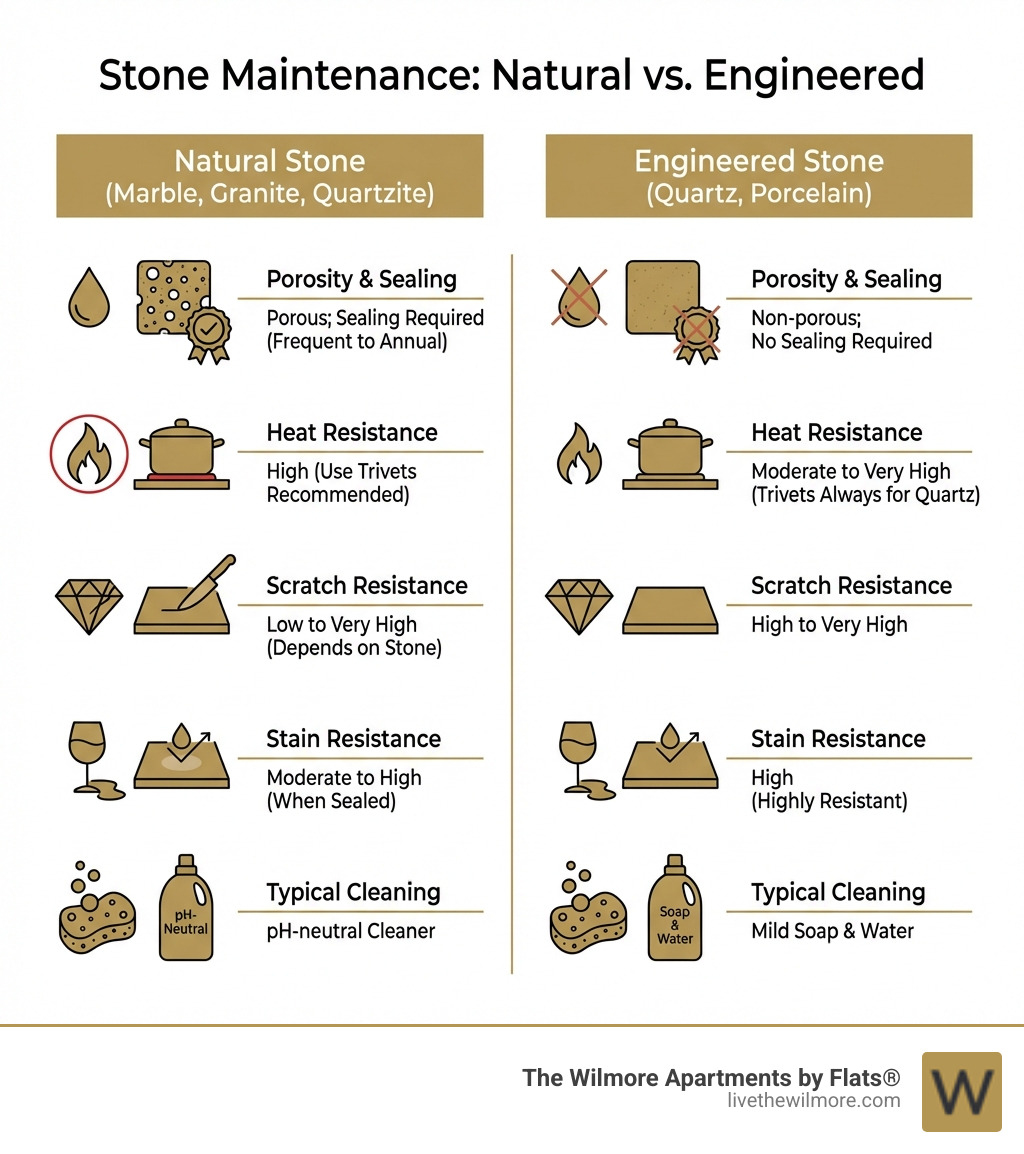
| Material | Porosity | Sealing Required | Heat Resistance | Scratch Resistance | Stain Resistance (when sealed) | Typical Cleaning |
|---|---|---|---|---|---|---|
| Quartz | Non-porous | No | Moderate | High | High | Mild soap & water |
| Marble | Porous | Yes (frequent) | High | Low | Moderate | pH-neutral cleaner |
| Granite | Porous | Yes (annual) | High | High | High | Mild soap & water |
| Quartzite | Low Porosity | Yes (6-12 months) | High | Very High | High | Mild soap & water |
| Porcelain | Non-porous | No | Very High | Very High | Very High | Mild soap & water |
Frequently Asked Questions about Luxury Countertop Materials
We often hear many questions from homeowners eager to make the best choice for their sophisticated living spaces. Here, we address some of the most common inquiries regarding luxury countertop materials.
What defines a countertop material as "luxury"?
A countertop material is defined as "luxury" by a combination of factors:
- Exceptional Quality and Craftsmanship: It must be top-notch in material composition and manufacturing (for engineered stones) or natural formation (for natural stones).
- Superior Aesthetics: It possesses unique visual characteristics like bold veining, rich colors, or intricate patterns that lift the overall design of a space. As designers note, the pattern, bold movements, and effortless flow are key.
- High Performance: It offers impressive durability, resistance to wear and tear, and often low porosity, making it resilient to daily use.
- Long-Term Value: Investing in these materials significantly boosts the resale value of a home, as the kitchen is a focal point for prospective buyers. Materials offering durability, easy maintenance, and timeless appeal provide the highest return on investment.
- Exclusivity/Rarity: For natural stones, rarity of certain patterns or colors can contribute to their luxury status.
Which luxury material is the most durable for high-traffic kitchens?
For kitchens that see a lot of activity, durability is paramount. Based on expert rankings and material properties, quartzite is arguably the most durable luxury material. It ranks highest in durability, followed closely by granite and engineered quartz. Quartzite boasts excellent scratch, acid, and heat resistance.
Engineered quartz also offers remarkable durability for high-traffic kitchens due to its non-porous nature, making it highly resistant to stains, scratches, and impact. While granite is very durable and heat-resistant, its porosity means it requires regular sealing to prevent staining, adding a layer of maintenance not found with quartz or porcelain. Porcelain is another top contender for durability, offering extreme resistance to scratches, heat, and stains.
Do engineered surfaces like quartz require sealing?
No, engineered surfaces like quartz and porcelain do not require sealing. This is one of their most significant advantages and a key reason for their popularity in luxury kitchens.
Both quartz and porcelain are manufactured to be non-porous. This means their surfaces are incredibly dense and don't have the microscopic channels found in natural stones that allow liquids to penetrate. As a result, they are inherently resistant to stains, bacteria, mold, and mildew, and they do not absorb liquids. This eliminates the need for any chemical sealants, making their maintenance exceptionally simple—typically just a wipe down with mild soap and water. This low-maintenance aspect allows homeowners to enjoy the beauty of their luxury countertops without the ongoing commitment of resealing.
Conclusion
Choosing the perfect luxury countertop materials is a pivotal decision that profoundly impacts the aesthetic and functionality of your home. As we’ve explored, the ideal surface balances captivating beauty with enduring performance, reflecting both your personal style and the demands of modern living. From the unparalleled natural artistry of marble, granite, and quartzite to the innovative engineering of quartz and porcelain, each material offers a unique set of advantages designed to lift your kitchen.
The trends for 2025 and beyond point towards a sophisticated blend of bold veining, deep, moody hues, and tactile matte finishes, often presented in sleek, slim profiles. These choices are not merely about current fashion but about creating spaces that are both visually stunning and sustainably conscious. By understanding the nuances of durability, maintenance, and visual impact, you can make an informed choice that improves your daily life and significantly contributes to your home's long-term value.
At The Wilmore Apartments by Flats®, we understand the importance of a carefully designed living space. Our commitment to modern design and urban convenience, especially in our Uptown Chicago residences, aligns perfectly with the pursuit of high-quality finishes that define luxury. We believe that every detail, including your countertops, should contribute to an exceptional living experience.
We invite you to find how these top-shelf surfaces can transform your living environment. Explore the possibilities and find a home where every detail reflects your aspirations for sophisticated urban living.