


Why Two Bedroom Soundproof Walls Make a Real Difference
Two bedroom soundproof walls are one of the most effective ways to reduce noise between rooms, block sound from neighbors, and get better sleep in a shared living space.
Here are the most effective solutions, ranked by impact:
| Solution | Best For | DIY-Friendly? |
|---|---|---|
| Acoustic panels (foam or fiberglass) | Echo reduction, soft noise | Yes |
| Mass Loaded Vinyl (MLV) | Blocking airborne noise | Yes |
| Green Glue + extra drywall layer | Significant noise reduction | Moderate |
| RSIC-1 clips + hat channel | Maximum structural isolation | No |
| Staggered stud wall construction | New builds or full renovations | No |
Living in a two-bedroom apartment in Uptown, Chicago at The Wilmore means you're often sharing walls — with neighbors, with the street, or with a roommate. Even a small gap in a wall can let in a lot more noise than you'd expect. Research shows that a gap covering just 1% of a wall's surface can leak up to 30% of sound. A 5% gap? Up to 90%.
The good news: you don't need to tear down walls to make a meaningful difference. Whether you rent or own, there are solutions that range from simple peel-and-stick panels to more involved structural upgrades.
This guide walks you through everything — from quick DIY fixes to permanent builds — so you can find the right approach for your space and situation.
Understanding Soundproofing vs. Sound Absorption for Bedrooms
When discussing two bedroom soundproof walls, it is easy to get confused by the industry jargon. Many people buy a pack of foam wedges thinking they will block out a neighbor’s loud TV, only to find they can still hear every word of the nightly news. This is because there is a fundamental difference between soundproofing and sound absorption.
Soundproofing is the act of blocking sound from entering or leaving a room. It requires mass and decoupling. Think of it like a heavy dam holding back water. On the other hand, sound absorption is about improving the sound quality inside the room by reducing echoes and reverberation. This is more like a sponge soaking up spills.
For a truly quiet bedroom, you often need a bit of both. Addressing the partition walls in an apartment requires understanding the Sound Transmission Class (STC) and the Noise Reduction Coefficient (NRC). STC measures how well a wall stops sound from passing through it, while NRC measures how much sound a surface absorbs. In many older buildings in Uptown, Chicago, partition walls might only have an STC rating of 35 to 42, whereas modern luxury standards aim for 53 dB or higher. Technical resources from Aeco Sound® provide further context on these ratings.
The Science of Blocking vs. Absorbing
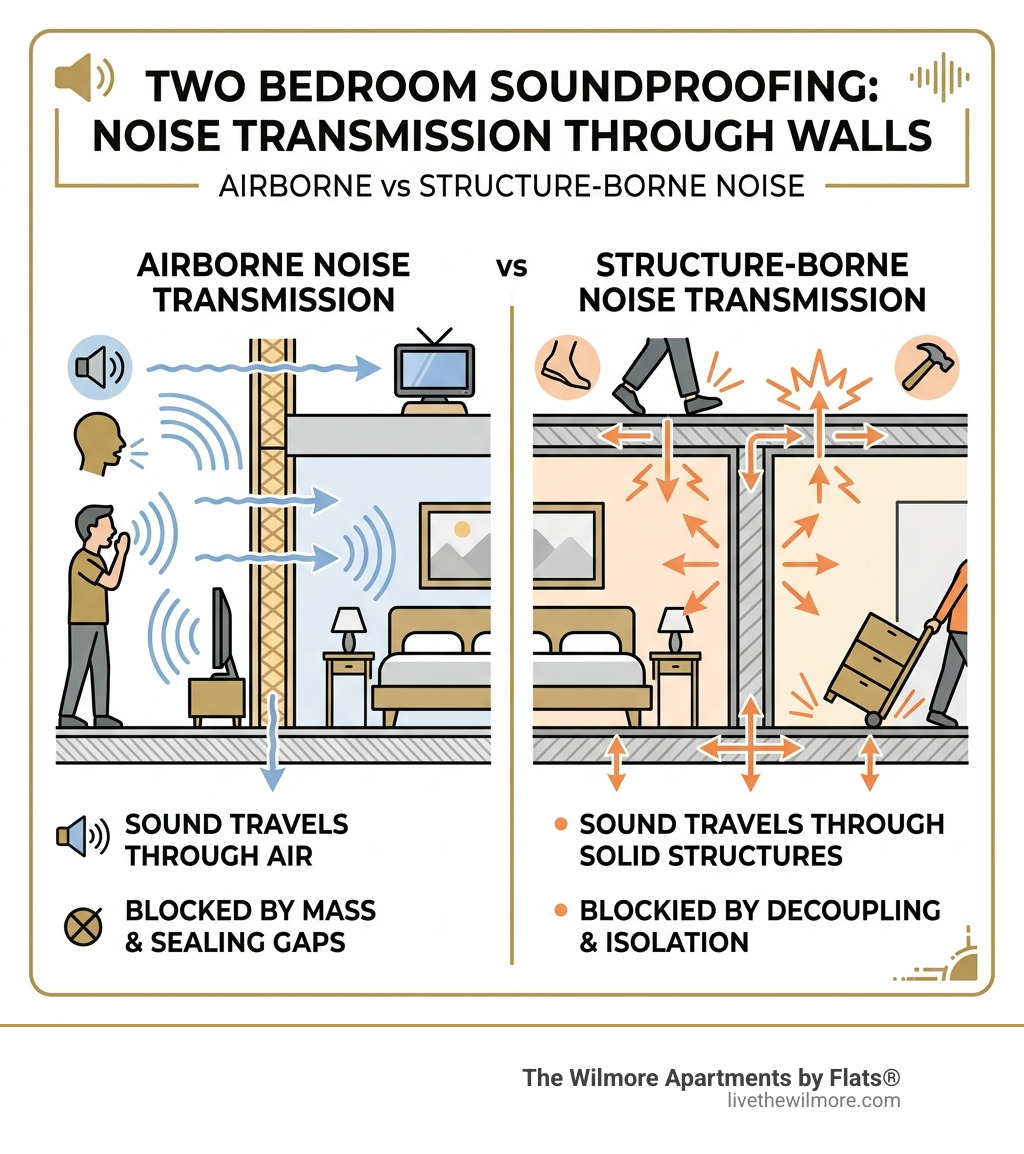
To effectively treat two bedroom soundproof walls, it is necessary to look at how sound moves. Sound is essentially vibration.
- Airborne Noise: This is sound that travels through the air, like voices, music, or street traffic. To stop this, mass (heavy materials) is required.
- Structure-borne Noise: This is vibration that travels through the physical frame of the building, like footsteps from above or a slamming door. To stop this, decoupling (breaking the physical connection between materials) is required.
If the goal is to stop hearing a roommate’s alarm clock, sound blocking is the solution. If the goal is to make a voice sound less "echoey" during a late-night gaming session or a work call, sound absorption is the focus.
Top Materials for Two Bedroom Soundproof Walls
Choosing the right materials is the difference between a peaceful night's sleep and a frustrating DIY project. The market is flooded with over 1,000 results for bedroom soundproofing products, but not all are created equal.

High-Density Fiberglass for Two Bedroom Soundproof Walls
If you are serious about noise reduction, fiberglass panels are generally superior to standard egg-carton foam. Brands like UMIACOUSTICS offer high-density fiberglass panels that provide much better sound absorption across a wider range of frequencies.
Fiberglass is denser and heavier than foam. While foam is great for high-frequency "flutter" echoes, high-density fiberglass can help dampen those annoying mid-to-low frequency sounds. When looking for these panels, check the thickness. A 2-inch thick panel will always outperform a 1-inch panel because it has more material to trap sound waves.
Self-Adhesive Panels for Two Bedroom Soundproof Walls
For those living in Uptown, Chicago at The Wilmore, starting a full-scale construction project might not be the first choice. This is where self-adhesive acoustic panels come in. These are incredibly popular—some top-rated hexagon and pyramid foam packs see over 2,000 purchases a month.
These panels are perfect for:
- Ease of Use: Just peel and stick.
- Aesthetics: Modern hexagon shapes or decorative wood slats can actually enhance bedroom decor.
- Rental Friendly: Many can be removed without destroying the drywall, though a small area should always be tested first.
While these won't turn a paper-thin wall into a vault, they significantly reduce the "bounce" of sound in a room, making it feel much quieter and more private. For more on how these work in shared living situations, check out the solutions for shared walls provided by Acoustic Geometry.
Structural Strategies for Maximum Noise Reduction
Sometimes, surface-level fixes aren't enough. If you are dealing with heavy street noise or structural vibrations, you might need to look behind the paint.
Decoupling with Resilient Channels and Clips
One of the "builder's secrets" to quiet living is decoupling. In a standard wall, the drywall is screwed directly into the studs. These studs act like a tuning fork, carrying vibrations from one side of the wall directly to the other.
By using RSIC-1 clips or resilient hat channels, you effectively "float" the drywall so it isn't touching the studs directly. This breaks the vibration path. Decoupling can improve a wall's STC rating by 15 to 20 points—a massive difference that can turn a loud conversation next door into a faint, indistinguishable murmur, as detailed in the Staggered Stud Wall Soundproofing guide. For more local insights, the Quiet Apartments Chicago Best Guide covers how these structural elements contribute to a premium living experience.
The Power of Mass and Damping
If you can't decouple the wall, your next best bet is to add mass and damping. This is often done by adding a second layer of 5/8-inch Type X drywall.
However, simply adding more drywall isn't the whole story. The magic happens when you use a damping compound like Green Glue between the two layers. This compound stays flexible and converts sound energy into trace amounts of heat. Systems like the NOVA LS-AC-02 utilize these principles, combining dense soundboards with air cavities and mineral wool insulation to create a formidable barrier against noise.
Installation Guide and Common Mistakes to Avoid
Even the best materials will fail if they aren't installed correctly. Sound is like water; it will find the smallest hole and leak through.
Proper Coverage and Placement
You don't necessarily need to cover 100% of your walls with panels to see a benefit. For sound absorption, covering 15% to 20% of the wall area is often enough to notice a difference.
- Height Matters: Place panels at "ear level"—usually between 3 and 6 feet from the floor.
- Target the Source: If the noise is coming from a specific neighbor, prioritize that shared wall.
- Reflective Points: Place panels on the wall opposite your bed to catch sound waves before they bounce back toward you.
Avoiding the Triple Leaf Effect
A common mistake in DIY soundproofing is creating a "triple leaf." This happens when you add a new wall layer with an air gap between it and the old wall, but you don't fill that gap correctly. Counterintuitively, this can sometimes make low-frequency noise worse because the air trapped between the layers acts like a spring, resonating at certain frequencies.
Always fill wall cavities with dense insulation like rock wool or fiberglass batts, and ensure you aren't compressing the insulation. Compressed insulation loses its ability to trap sound. Additionally, don't forget the small stuff:
- Electrical Outlets: Use putty pads behind outlet boxes. These are often the "hidden" holes that let sound through.
- Perimeter Gaps: Use acoustical caulk (which stays flexible) to seal the tiny gaps where the wall meets the floor and ceiling.
Frequently Asked Questions about Bedroom Soundproofing
How much wall coverage is needed to reduce noise?
For basic sound absorption and to reduce echoes, covering 15-20% of your two bedroom soundproof walls is the "sweet spot." If you are trying to block sound, you need 100% coverage with heavy materials like extra drywall or Mass Loaded Vinyl, as even a 1% gap can ruin your results.
Can soundproof panels block street or neighbor noise?
Thin foam panels will not block street noise or loud neighbors. They are designed to stop echoes inside your room. To block outside noise, you need mass (like 5/8" drywall) or structural changes (like resilient clips). However, high-density fiberglass panels can help dampen the perception of neighbor noise by lowering the overall sound energy in your room.
Are fiberglass panels better than foam for bedrooms?
Yes. Fiberglass panels are generally denser and have a higher NRC rating than standard polyurethane foam. They are more effective at absorbing lower frequencies (like the rumble of a truck or a bass guitar) which foam often misses.
Conclusion
Creating a sanctuary in the heart of Uptown Chicago starts with peace and quiet. Whether you are opting for decorative self-adhesive panels or investing in structural decoupling, addressing two bedroom soundproof walls is a vital step toward a better living experience. The Wilmore is designed with the understanding that luxury isn't just about high-end finishes and modern design—it's about the comfort and privacy that allow for true relaxation.
The apartments in Uptown Chicago are designed with the urban resident in mind, blending sophisticated style with the convenience of a prime Cook County location. Those looking for a space that values downtime as much as a social life are invited to explore the thoughtfully designed homes at The Wilmore.
View the quiet two-bedroom floorplans and see how spacious layouts combine with an exceptional living experience in Chicago.