


Why Finding Quiet Chicago Apartments Matters for Your Well-Being
Quiet apartments chicago searches have surged as more professionals work from home and seek peaceful urban living. Finding tranquil housing in a busy city like Chicago requires knowing where to look and what features matter most.
Quick Guide to Finding Quiet Chicago Apartments:
- Best neighborhoods: Logan Square, Bucktown, Lincoln Park, Lakeview, Ravenswood
- Ideal building types: Pre-1920s with plaster walls, concrete construction, townhome-style units
- Key features: Top floor or corner units, sound-insulated windows, thick walls
- Rental strategy: Choose condo units over large rental complexes when possible
- Assessment tips: Visit at different times, especially evenings and weekends
The challenge of urban noise affects more than just your comfort. Street traffic, neighbor sounds, and city life can disrupt sleep, increase stress, and impact your overall quality of life. Public-health researchers note that prolonged exposure to urban noise above 55 dB can contribute to sleep disturbance and cardiovascular issues, as outlined by the World Health Organization's findings on environmental noise.
Chicago offers unique opportunities for peaceful apartment living. The city's diverse neighborhoods include pockets of residential calm, while building materials from different eras create varying levels of sound insulation. Older buildings with plaster lath walls often provide superior soundproofing compared to modern construction, though well-built newer properties with concrete walls can be exceptionally quiet.
The key lies in understanding which building types, locations, and features contribute to a serene living environment. Whether you're seeking a studio in a vintage high-rise or a spacious unit in a contemporary community, the right knowledge helps you find your urban sanctuary.
The Blueprint for Serenity: Building Types and Construction
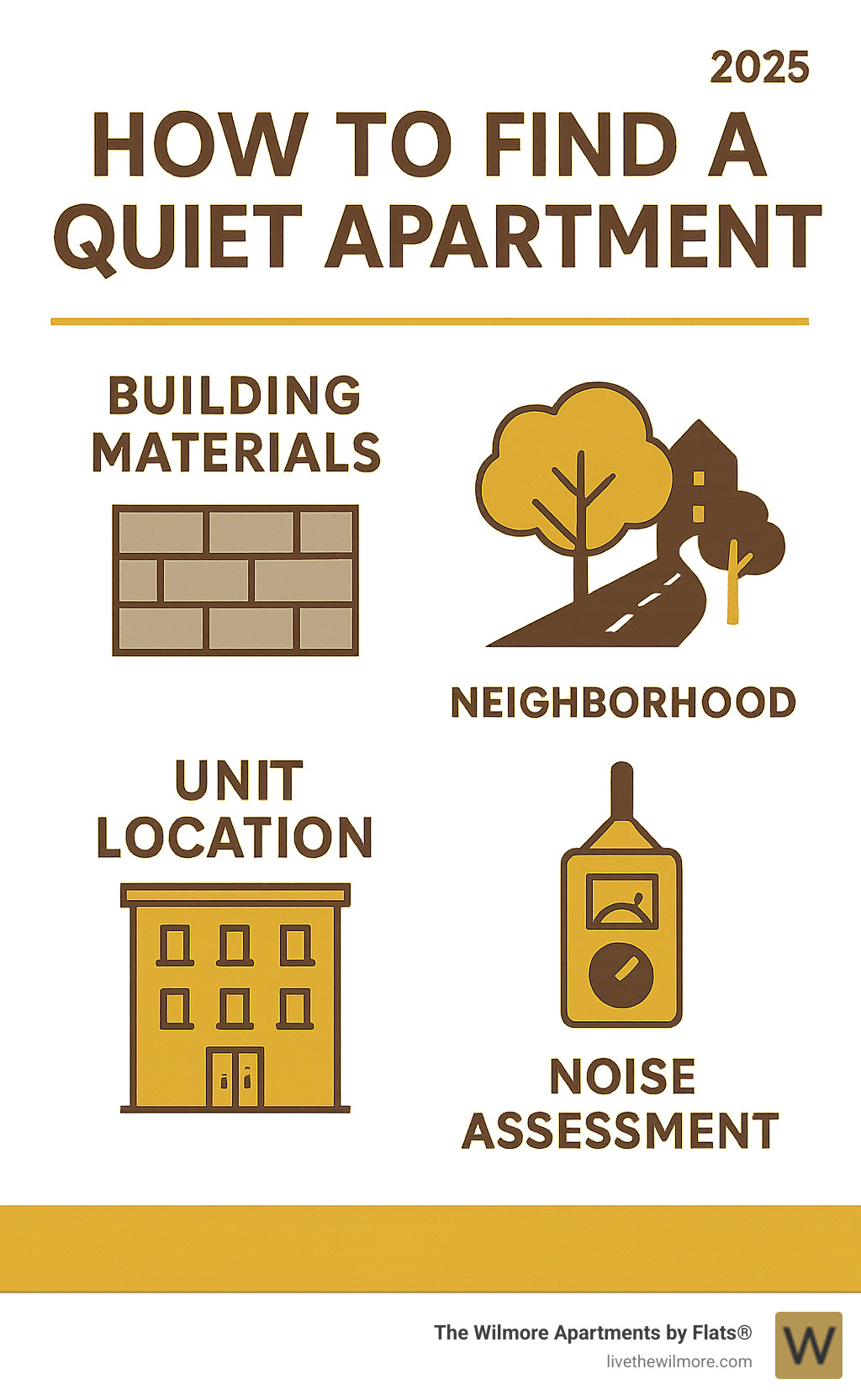
When we talk about finding a quiet apartment in a busy city like Chicago, the building itself is often our first line of defense against noise. The materials used, the way it was constructed, and even its architectural style can all play a significant role in how much outside sound makes its way into your living space. We've learned that not all buildings are created equal when it comes to peace and quiet.
Construction Features That Improve Sound Insulation
The age and construction method of an apartment building are paramount when evaluating its potential for quiet living. We often find that older buildings, especially those constructed before the 1920s, offer an unexpected level of tranquility. These charming structures typically feature thick plaster lath walls and solid hardwood floors, which, when properly maintained, can be exceptionally soundproof. The sheer density of these materials acts as a formidable barrier against both airborne and impact noise. Imagine the quiet accept of a century-old building, where the hustle and bustle of the city seem to melt away as you step inside.

On the other hand, modern construction can be a mixed bag. While some newer buildings, particularly luxury high-rises, prioritize sound insulation through the extensive use of concrete walls and floors, others may fall short. Buildings designed purely for profit maximization might use thinner, less dense materials, leading to poor sound isolation between units. However, well-executed new construction, often employing steel framing and poured concrete, can rival or even surpass the soundproofing capabilities of their older counterparts. When we consider a new build, we look for evidence of robust construction, such as significant wall thickness and high-quality, sound-insulated windows. Double-pane windows, for instance, are a must-have for dampening exterior noise from traffic or city sounds.
Apartment Community Design Considerations
Beyond the individual unit, the overall design and management of an apartment community significantly influence its quietness. Many pure rental apartment buildings are constructed with a transient population in mind, which can sometimes lead to less emphasis on long-term soundproofing solutions. In contrast, renting from a unit owner in a condo building is often a better bet for soundproofing. Condo buildings are typically built to a higher standard, as residents are invested in the property's quality and long-term quiet enjoyment. This often means better initial construction and, importantly, community association guidelines that might enforce quiet hours or address excessive noise more effectively.
Thoughtful layouts within a community can also minimize noise transfer. For example, placing common areas like gyms, laundry rooms, or resident lounges away from residential units can prevent amenity-related noise from disturbing our homes. Some communities even integrate specific soundproofing standards into their design, reflecting a commitment to resident comfort and a serene living environment.
Key Architectural Features for a Quiet Apartment
When we're hunting for that perfect quiet spot, certain architectural features within an apartment or building can make all the difference. Townhome-style units, for instance, are often a fantastic choice. With fewer shared walls – sometimes none on certain sides – and no upstairs or downstairs neighbors, they naturally offer a significant reduction in noise. It’s like having a little slice of suburban peace right in the city.
Within larger buildings, the location of your unit is critical. Top-floor apartments are often highly sought after for their quietness, as they eliminate any noise from neighbors above. Similarly, corner units tend to be quieter because they have fewer shared walls with adjacent units. While top-floor units might still contend with roof or HVAC noise, and corner units can sometimes have more exposure to outdoor sounds, they generally provide a much quieter experience than a middle unit on a lower floor.
Beyond the walls, the quality of windows and doors plays a silent but crucial role. Double-pane windows are essential for blocking out street noise, while solid-core doors provide a much better sound barrier than their hollow-core counterparts. We also consider the building's overall layout – is your unit directly above a busy retail space, or is it tucked away in a more residential corner? Avoiding units directly facing busy streets, train tracks, or high-traffic common areas can be a smart move for maximizing tranquility.
Pinpointing Peace: Quiet Neighborhoods in Chicago
Finding the perfect quiet apartments Chicago offers means knowing which neighborhoods naturally lean toward tranquility. Chicago's diverse landscape includes busy commercial districts and peaceful residential pockets, each with its own character. The secret lies in understanding where tree-lined streets, thoughtful urban planning, and proximity to green spaces create natural sound barriers.

North Side Sanctuaries
The North Side holds some of Chicago's most peaceful residential gems. Lincoln Park stands out with its stunning lakefront location, where the expansive park creates a natural buffer from city noise. The neighborhood's tree-lined streets and well-maintained historic buildings offer a serene backdrop for daily life.
Ravenswood feels almost suburban while remaining firmly urban. Many residents describe it as surprisingly peaceful, with train sounds barely noticeable unless windows are open. The neighborhood's residential character creates a calm atmosphere that's hard to find elsewhere in the city.
North Center and Roscoe Village continue this theme of residential tranquility. These areas feature charming local businesses and strong community connections without the constant hum of heavy traffic. The access to green spaces throughout these neighborhoods provides additional sound buffering and peaceful outdoor retreats.
If you're interested in exploring how neighborhood character impacts daily life, more info about the Uptown Chicago Neighborhood shows how location and community design work together.
West Side Retreats
The West Side offers an interesting balance between cultural vibrancy and residential calm. Logan Square may be known for its arts scene and dining, but step off the main thoroughfares and you'll find remarkably peaceful side streets. The key here is understanding the difference between main thoroughfares and the quieter residential blocks that branch off from them.
Bucktown and Wicker Park follow this same pattern. While the main strips buzz with activity, the surrounding residential streets offer a completely different experience. These neighborhoods prove that you can have both - access to vibrant community life when you want it, and peaceful retreat when you need it.
The community atmosphere in these areas tends to be more considerate, with residents who understand the value of balancing energy with respect for their neighbors' need for peace.
South Side Havens
The South Side presents unique opportunities for peaceful living, particularly in Hyde Park and Kenwood. These neighborhoods benefit from their proximity to the lakefront, which provides both beautiful views and natural sound barriers. The university atmosphere in Hyde Park creates a more contemplative environment compared to purely commercial areas.
Kenwood's historic architecture and tree-lined streets create natural sound dampening, while the area's more spacious layout means less density and noise. Some South Side communities even offer gated options that provide additional privacy and noise control.
The lakefront proximity throughout these areas means you're never far from the calming sounds of water rather than traffic, creating a more naturally peaceful urban environment.
Your Search for Quiet Apartments Chicago: A Renter's Checklist
Finding your ideal tranquil space in Chicago requires more than just knowing the right neighborhoods; it demands a proactive approach and a keen eye for detail. The excitement of apartment hunting can sometimes cloud our judgment, but when it comes to quiet apartments Chicago has to offer, taking time for proper assessment can save months of regret later.

How to Assess Noise Levels Before You Sign the Lease
The most revealing test of any apartment's noise level happens when we visit at different times throughout the week. That charming unit that seems perfectly serene during a Tuesday afternoon showing might tell a completely different story on Friday evening when neighbors are unwinding from their workweek. We always recommend scheduling multiple visits - perhaps one during weekday evening hours when people are cooking dinner and watching television, and another on a weekend morning when families might be more active.
During these visits, stand quietly in each room and really listen. Can you hear conversations from neighboring units? Are there footsteps from upstairs neighbors, or the distant hum of appliances? These subtle sounds might seem minor during a brief showing, but they can become quite noticeable when you're trying to relax at home.
Street traffic patterns change dramatically throughout the day and week. A residential street might be peaceful during lunch but transform into a busy thoroughfare during rush hour. If you're considering a unit near Chicago's 'L' tracks, pay special attention to train frequency and how much sound penetrates the apartment with windows closed. Some residents find the rhythmic sound of trains oddly soothing, while others find it disruptive to sleep and concentration.
Don't forget to investigate nearby nightlife and construction. That trendy restaurant down the block might draw crowds until late on weekends, and Chicago's constant development means construction projects can appear seemingly overnight. A quick walk around the neighborhood during your visit can reveal a lot about the daily soundscape you'd be joining.
Red Flags: Features and Locations to Scrutinize
Certain apartment features and locations consistently create noise challenges, and recognizing these warning signs early can save considerable frustration. Units positioned above commercial spaces often deal with delivery trucks, patron conversations, and operational sounds that filter up through floors. The convenience of having a coffee shop downstairs might seem appealing until you realize their 6 AM opening routine includes grinding coffee beans directly below your bedroom.
Proximity to building infrastructure creates its own set of noise concerns. Apartments near elevators subject residents to constant mechanical sounds and foot traffic, while units close to trash chutes deal with the clatter of disposal at all hours. Building entrances generate similar issues - people naturally gather, chat, and come and go, creating a steady stream of activity that can be surprisingly disruptive.
The apartment's window and door quality reveals a lot about overall noise control. Single-pane windows offer minimal protection from street sounds, allowing traffic, sirens, and neighborhood activity to easily penetrate your living space. Similarly, hollow-core doors provide virtually no sound barrier between your apartment and hallway conversations or foot traffic.
When touring any building, notice whether sound-dampening seems intentional in the design. Are common areas carpeted or do hard surfaces create echo? Do hallways feel acoustically considerate, or does every footstep and conversation carry throughout the building?
Questions to Ask Property Management
The leasing team's responses to specific questions can reveal both the building's actual noise characteristics and management's commitment to resident comfort. Start by asking about building construction materials - concrete walls and floors typically provide superior sound insulation compared to standard drywall construction. Their ability to answer this question confidently often indicates whether noise considerations were part of the building's design process.
Understanding the community's approach to noise management gives insight into your future living experience. Ask about quiet hours, noise complaint procedures, and how consistently these policies are enforced. A property management team that takes noise concerns seriously will have clear processes in place and won't hesitate to discuss them.
Unit location relative to amenities can significantly impact your daily experience. Is your potential apartment directly above the fitness center, or does it share a wall with the building's mechanical room? These details might not be immediately obvious during a showing, but they'll certainly become apparent once you move in.
Finally, inquire about any recent soundproofing improvements or planned renovations that might affect noise levels. Some buildings invest in acoustic upgrades over time, while others might have upcoming projects that could temporarily increase noise.
The leasing team's willingness to address these questions openly often reflects their confidence in the building's peaceful environment. For more details on the types of amenities that contribute to comfortable, serene living, explore More info about apartment amenities.
Elevating Your Experience: Luxury and Quiet Living
There's something magical about stepping into a luxury apartment after a long day in the city. The noise seems to melt away, replaced by an atmosphere of calm sophistication. When we're searching for quiet apartments Chicago offers at the luxury level, we're not just looking for silence – we're seeking an liftd living experience that combines tranquility with thoughtful design.

The Sound of Silence in Modern Buildings
Modern luxury buildings in Chicago understand that true comfort goes beyond beautiful finishes and high-end appliances. These communities invest heavily in concrete construction that creates natural sound barriers between units and against outside noise. When walls and floors are built with substantial concrete, the difference is remarkable – you might forget you even have neighbors.
The windows in these buildings tell their own story of thoughtful design. Sound-insulated windows do more than just let in natural light; they act as shields against the urban soundtrack outside. Double or even triple-pane glass creates layers of protection that transform busy street noise into barely audible background hum.
What really sets luxury communities apart is how they design their shared spaces with tranquility in mind. Co-working spaces feature private nooks with sound-absorbing materials, creating productive environments where you can focus without distraction. Resident libraries offer quiet retreats for reading or reflection, while landscaped courtyards provide outdoor sanctuaries where city sounds feel distant and muffled.
Some buildings even incorporate water features strategically throughout their common areas. The gentle sound of flowing water creates natural white noise that masks other sounds while adding a spa-like atmosphere to daily life. These aren't just amenities – they're carefully planned elements that contribute to an overall sense of peace. For more insight into what defines luxury living in Chicago, we encourage you to explore More info about luxury apartments in Chicago.
Designing Your Personal Oasis
Even in the most well-built apartment, we can improve our personal sanctuary with some thoughtful touches. The beauty of creating your own oasis is that small changes can make a big difference in how sound travels through your space.
Strategic furniture placement works wonders for sound absorption. That large bookshelf filled with your favorite novels? It's not just storage – it's a sound diffuser that breaks up noise from neighboring units. Placing upholstered furniture like sofas or armchairs against shared walls adds another layer of cushioning against any sounds that might try to sneak through.
Area rugs on hard floors are game-changers, especially when paired with thick padding underneath. They absorb the impact of footsteps and reduce echo, making your space feel more intimate and cozy. Sound-absorbing curtains serve double duty by blocking light when you want to sleep in and muffling street noise throughout the day.
Don't underestimate the power of nature in creating calm. Indoor plants add life to your space while subtly improving acoustics – their leaves and soil naturally absorb sound waves. For those persistent ambient noises that urban living sometimes brings, a white noise machine can be your secret weapon, creating consistent, soothing sound that helps your mind relax and focus on what matters most.
The goal isn't to live in complete silence, but to curate the sounds in your environment so your home truly feels like the peaceful retreat you deserve after navigating the energy of Chicago.
Frequently Asked Questions About Finding Quiet Apartments in Chicago
When you're searching for quiet apartments Chicago has to offer, the same questions tend to come up again and again. We've heard these concerns countless times from apartment hunters, and we're here to share what we've learned about finding peace in the city.
Are top-floor apartments always the quietest?
Here's the truth: top-floor apartments are usually your best bet for avoiding neighbor noise, but they're not always the perfect solution. The biggest advantage is obvious – no noise from above. You won't deal with footsteps, dropped objects, or that mysterious rolling sound that seems to happen at 2 AM in every apartment building.
However, top floors come with their own quirks. You might hear roof-mounted HVAC systems humming away, or even elevator machinery if it's housed on the roof. Some buildings have rooftop equipment that creates vibrations you can feel through the floor.
Top-floor units are still susceptible to street noise, especially if your windows face a busy road. In some cases, you might actually hear more sirens and traffic because there aren't other buildings blocking the sound. Despite these potential issues, top floors remain a strong choice for reducing the most common apartment noise complaints – sounds from other residents.
What's the best way to deal with a noisy neighbor?
Nobody wants to be "that person" who complains, but everyone deserves to enjoy their home in peace. Start with direct, polite communication whenever possible. Many people genuinely don't realize they're being loud. A friendly conversation can work wonders – maybe they didn't know their music carries through the walls, or that their dog barks when they're at work.
If talking doesn't help, it's time to get more formal. Review your community guidelines first to understand what rules are actually in place. Most buildings have specific quiet hours and noise policies that are often based on the City of Chicago's official ordinance. Then contact your property management with the facts.
Document everything – dates, times, and descriptions of the disturbances. This isn't about being petty; it's about giving management the information they need to address the situation professionally. A detailed log shows you've tried to be reasonable while protecting your right to peaceful enjoyment of your home.
Can I soundproof my rental apartment?
You can't tear down walls or install professional soundproofing, but there are plenty of non-permanent solutions that make a real difference. Think of it as creating layers of sound protection throughout your space.
Start with the basics: weatherstripping around doors and windows seals gaps where noise sneaks in. Door sweeps at the bottom of your entry door block hallway sounds from creeping under. These simple fixes also help with energy efficiency, so it's a win-win.
Heavy, sound-dampening curtains are one of the best investments you can make. They absorb external sounds and improve the acoustics inside your room. For shared walls, try placing tall, filled bookshelves against them – books are surprisingly effective sound absorbers, and you get extra storage.
Don't forget about your floors. Thick area rugs with dense pads are essential if you have hardwood or concrete floors. They absorb impact noise and reduce echoes, making your entire space feel more peaceful. These changes might seem small, but together they can transform a noisy apartment into your personal retreat.
Conclusion: Find Your Perfect, Peaceful Chicago Home
Your journey to finding a tranquil urban sanctuary in Chicago doesn't have to feel overwhelming. Throughout this guide, we've uncovered the essential elements that transform a regular apartment into a peaceful retreat. The construction materials matter tremendously – from the thick plaster walls of pre-war buildings to the concrete construction of modern luxury properties. These foundational elements create the first barrier between you and the city's constant hum.
Neighborhood selection plays an equally vital role in your quest for serenity. Whether you're drawn to the tree-lined streets of Lincoln Park, the residential charm of Ravenswood, or the balanced vibrancy of Logan Square's quieter blocks, Chicago offers numerous pockets of peace. Each area brings its own character while maintaining that coveted residential calm.
But perhaps most importantly, we've emphasized the power of personal due diligence. Those multiple visits at different times of day, the targeted questions to property management, and your careful assessment of potential red flags – these steps ensure you're making an informed choice rather than hoping for the best.
For those ready to experience the perfect blend of urban convenience and peaceful living, The Wilmore Apartments in Uptown Chicago represents exactly what we've been discussing. Our community understands that finding one of the best quiet apartments Chicago has to offer means more than just four walls and a roof. It means thoughtful design that prioritizes your comfort, modern construction that keeps city noise at bay, and a prime location that puts you close to everything while maintaining that residential tranquility.
Your search for serenity in the city ends when you find a community that truly values peaceful living as much as you do. We invite you to find how our approach to luxury apartment living can provide the urban oasis you've been seeking.