


Why Knowing How to Cover Old Apartment Countertop Surfaces Is a Game-Changer for Renters
Knowing how to cover old apartment countertop surfaces can completely transform your kitchen — no renovation required and no security deposit at risk.
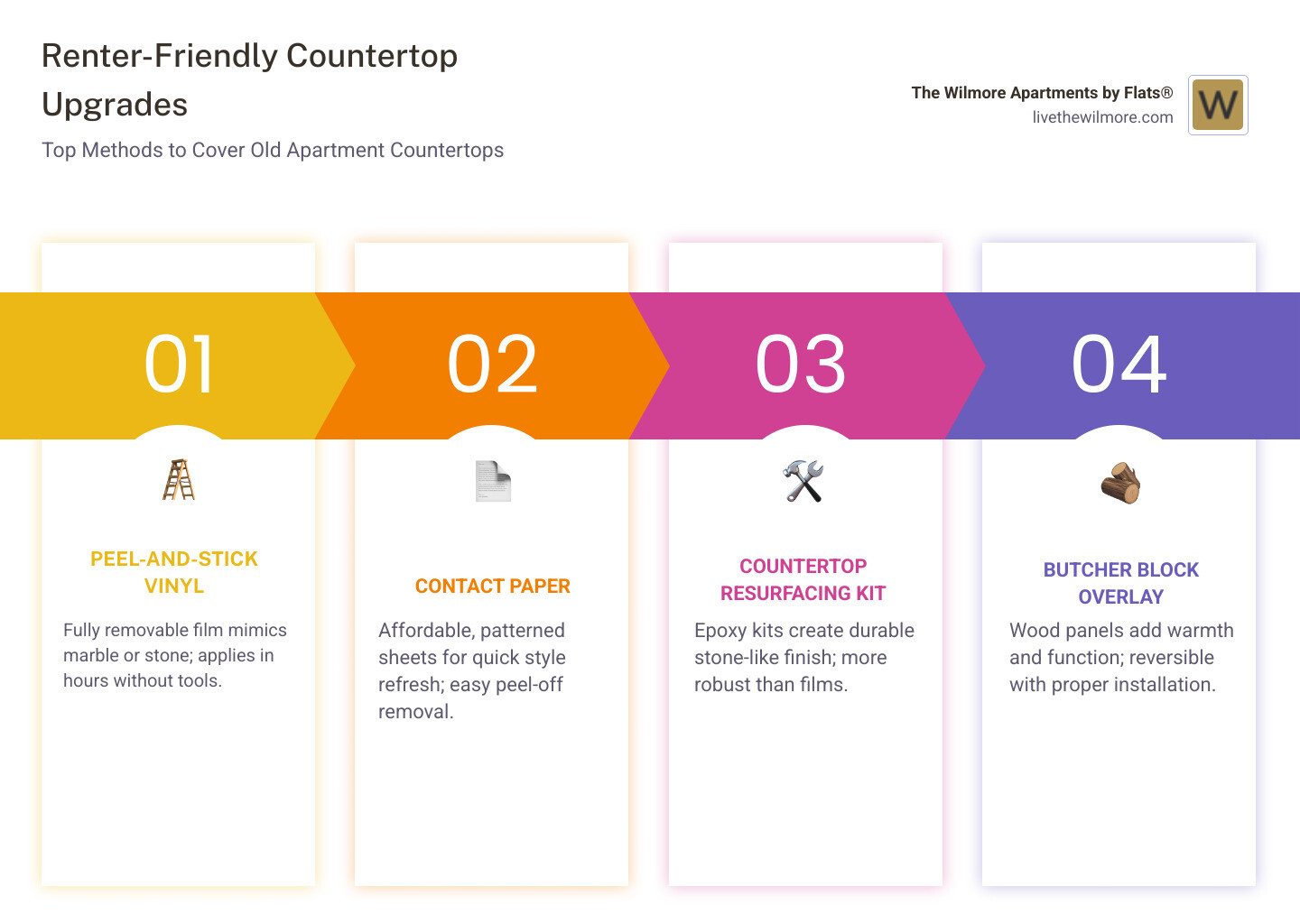
Here are the most renter-friendly ways to do it:
- Peel-and-stick vinyl film — Apply over existing surfaces for a marble or stone look; fully removable
- Contact paper — One of the most accessible options; available in dozens of patterns
- Countertop resurfacing kit — Epoxy-based kits that mimic stone; more durable than film
- Skim coat concrete — Thin cement layer for an industrial look; requires sealing
- Butcher block overlay — Wood panels laid over existing surfaces for warmth and function
- Tile-over-tile — New ceramic tile applied directly on stable, flat surfaces
Most of these take just a few hours and offer a sophisticated alternative to a full replacement.
Walk into almost any rental kitchen and you'll find the same story: dated laminate, cracked tile, or a finish that's seen better days. For renters in a place like Uptown Chicago, where modern living matters, a tired countertop can feel like a real setback.
The good news? You don't need to replace anything.
There's a growing range of temporary and semi-permanent solutions that can make old countertops look brand new — without landlord drama or losing your deposit. From peel-and-stick marble vinyl to wood overlays and concrete skim coats, the options in April 2026 are better than ever.
This guide walks you through the best methods, what actually works, and how to avoid the mistakes that trip most renters up.
How to Cover Old Apartment Countertop Surfaces with Vinyl and Film
When we think about the most efficient way to refresh a kitchen, vinyl film and contact paper consistently top our list. These materials have come a long way since the thin, bubbly papers of the past. Modern countertop films are engineered to withstand the daily hustle of a Chicago kitchen while looking remarkably like high-end stone.
The Magic of Peel-and-Stick Vinyl
Peel-and-stick vinyl is essentially a giant, heavy-duty sticker for your counters. Unlike standard contact paper used for lining shelves, dedicated countertop film is significantly thicker. This thickness is vital because it helps the material resist tears and prevents the "ghosting" of the texture underneath. If you are exploring 10 Countertop Cover Options to Try at Home, you will find that vinyl film is often cited as the gold standard for renters because of its balance between durability and ease of removal.
While we love the look of durable countertop options like quartz or granite, vinyl allows us to mimic those aesthetics for a fraction of the commitment. For those of us living in Uptown Chicago, where we value both style and flexibility, this is the ultimate win-win.
Reversibility: The Renter's Best Friend
The primary concern for any apartment dweller is: "Can I take this off when I move?" The answer with high-quality vinyl is a resounding yes. Most films use a pressure-sensitive adhesive that stays put during use but releases cleanly when heated slightly with a hair dryer. This ensures that your original laminate or tile remains untouched, keeping your security deposit safe.
Step-by-Step: How to Cover Old Apartment Countertop with Marble Vinyl
If you've decided on a marble-effect vinyl, the application process is where the real transformation happens. We’ve found that the secret to a professional finish isn't just in the sticking—it’s in the preparation.

1. Deep Clean and Degrease
Any leftover grease or crumbs will create bumps under the vinyl. We recommend using a heavy-duty degreaser or a mixture of vinegar and water to ensure the surface is pristine. Let it dry completely before proceeding.
2. Fill the Gaps (The Secret Step)
If you are covering a tiled countertop, the grout lines are your biggest enemy. If you simply stick the vinyl over them, you’ll see every single grid line. To avoid this, we use a technique involving paintable caulk. Fill the grout lines with caulk, overfilling slightly, and then smooth it out with a putty knife.
3. Sand for Success
Once the caulk is dry, use 220-grit sandpaper to sand the filled areas until they are perfectly flush with the tile. This creates a flat, continuous surface. Wipe away all the dust with a damp cloth and let it dry again.
4. Measure and Cut
Measure your countertops and cut the vinyl into manageable sections, leaving at least an extra two inches on all sides. It’s always better to have too much than too little.
5. The Application
Start at one end of the counter. Peel back a few inches of the backing and align the vinyl with the edge of the counter. Use a squeegee or a felt-edged smoothing tool to press the vinyl down, working from the center outward to push out any air bubbles.
6. Managing the Edges and Corners
This is where a bit of heat helps. Use a hair dryer on a low setting to soften the vinyl as you wrap it over the edges and around corners. This makes the material more pliable and helps it "shrink-wrap" to the shape of the counter.
7. Trim and Seal
Use a sharp utility knife to trim the excess vinyl along the underside of the counter or against the backsplash. For an extra-polished look, apply a thin bead of clear silicone caulk along the seams where the vinyl meets the sink or the wall.
Choosing Between Contact Paper and Heavy-Duty Vinyl
Not all "stickers" are created equal. When we are deciding how to cover old apartment countertop surfaces, we need to choose the right material for the job.
Contact Paper
Contact paper is the most accessible option. It is thin, easy to find, and comes in an endless array of patterns.
- Pros: Very easy to handle; versatile; great for low-traffic areas like a bathroom vanity.
- Cons: Prone to tearing; may show the texture of the surface underneath; less heat resistance.
Heavy-Duty Vinyl Film
Often marketed as "Instant Granite" or "Countertop Film," this material is the "big brother" of contact paper.
- Pros: Much thicker and more durable; hides imperfections well; often has a realistic texture or high-gloss finish.
- Cons: Can be trickier to apply around tight corners because of its thickness; requires more precision during installation.
For a high-traffic kitchen in a bustling area like Uptown, we almost always recommend the heavy-duty vinyl. It stands up better to the daily wear and tear of meal prep and grocery bags.
Preparing Surfaces and Smoothing Grout Lines
Preparation is 90% of the work. If you skip the prep, your new cover will likely peel or show unsightly lumps within weeks.
Degreasing and Scuffing
Beyond just cleaning, the surface needs to be "grippy." If you are working with an old laminate counter that is very glossy, a light sanding with a fine-grit sandpaper can help the adhesive bond better. After sanding, ensure every speck of dust is removed.
The Caulk Method for Tile
As mentioned in our step-by-step guide, filling grout lines is essential. According to How To Resurface Countertops, creating a level base is the only way to ensure the longevity of an overlay. While we might dream of luxury countertop materials, we can achieve a very similar look by ensuring our base is as flat as a slab of marble.
Alternative Overlays: Wood, Concrete, and Tile
If vinyl isn't your style, there are several other ways to cover an old countertop that offer a more tactile, "real" feel.
| Method | Material | Difficulty | Best For |
|---|---|---|---|
| Butcher Block Overlay | Wood slabs | Moderate | Warmth, traditional look |
| Skim Coat Concrete | Cement overlay | High | Industrial, modern aesthetic |
| Tile-over-Tile | Ceramic/Porcelain | Moderate | Durability, classic style |
| Laminate Sheet | New laminate | High | Long-term durability |
Butcher Block Overlays
For those of us who love a farmhouse or Scandinavian aesthetic, a wood overlay is a fantastic choice. You can purchase thin butcher block slabs and essentially "cap" your existing counters. While this is a more significant project, it provides a functional cutting surface (if sealed correctly) and adds immense warmth to the kitchen.
Skim Coat Concrete
If you’re after an industrial look, products like Ardex Feather Finish allow you to apply a very thin layer of concrete directly over laminate or tile. It requires several thin coats and a significant amount of sanding, but the result is a solid, stone-like surface. Just remember that concrete is porous and must be sealed with a food-safe sealer to prevent stains.
Tile-over-Tile
If your landlord gives you the green light for a more permanent (but still technically an "overlay") change, you can tile directly over old, flat laminate or existing tile. This avoids the messy demolition of the old counters. However, this will raise the height of your countertops slightly, which is something to consider near outlets and appliances. This method brings us closer to the feeling of apartments with quartz countertops without the full-scale construction.
Maintenance and Longevity of Covered Surfaces
Once you've successfully covered your countertops, you want that hard work to last. Covered surfaces require a slightly different care routine than standard stone or laminate.
The Golden Rule: No Direct Heat
Whether you use vinyl, contact paper, or a resurfacing kit, heat is the enemy. Never place a hot pot or pan directly on a covered surface. The heat can melt vinyl, scorch paint, or cause adhesive to fail. Always use trivets or hot pads.
Cleaning with Care
Avoid abrasive scrubbers or harsh chemical cleaners like bleach, which can dull the finish of vinyl or degrade the sealer on concrete. We recommend a simple mixture of warm water and mild dish soap. For vinyl, a soft microfiber cloth is perfect for maintaining that "just-installed" shine.
Protection from Scratches
While heavy-duty vinyl is tough, it isn't indestructible. Always use a cutting board. Sharp knives will slice through film and contact paper easily, leaving a gap that can collect moisture and lead to peeling. In 5 Clever Ways to Update Old Laminate Countertops (Without Spending a Ton), experts emphasize that protection is the key to making these stylish updates last for years.
Managing Moisture
Be particularly careful around the sink. If water gets under the edges of your vinyl or wood overlay, it can cause the material to lift or the wood to warp. Using a bead of silicone caulk around the sink edge is a simple way to create a waterproof barrier.
Step-by-Step Maintenance Checklist:
- Daily: Wipe down with a soft cloth and mild soap.
- Weekly: Check edges for any lifting; press down or re-apply a tiny bit of adhesive if needed.
- Monthly: Inspect caulk lines around the sink and backsplash; refresh if cracking appears.
Common Mistakes When Learning How to Cover Old Apartment Countertop
Even with the best intentions, things can go wrong. Here are the pitfalls we see most often:
- Trapped Air Bubbles: These usually happen when the vinyl is applied too quickly. If you find a stubborn bubble, don't try to peel the whole thing back. Instead, take a tiny sewing pin, prick the bubble, and use your finger to push the air out.
- Rushing the Prep: We can't stress this enough—if the surface is greasy, the vinyl will not stick. Spend the extra time cleaning.
- Visible Grout: If you're covering tile and skip the filling/sanding step, your counters will look like "vinyl-covered tile" rather than a solid slab.
- Poor Edge Trimming: Using a dull blade will result in jagged edges that are more likely to snag and peel. Always use a fresh, sharp utility knife blade.
Frequently Asked Questions
Are these methods truly reversible for renters?
Yes! Vinyl film and contact paper are designed to be removable. If the adhesive feels stubborn when it’s time to move out of your Uptown Chicago apartment, a little heat from a hair dryer will soften it right up, allowing it to peel off without leaving a residue. Concrete and tile overlays are more permanent and should only be done with landlord approval.
How do I smooth out tile grout before covering?
The most effective way is to use a paintable, sandable caulk or a specialized joint compound. Fill the lines, let them dry, and sand them until the entire surface feels like one continuous piece. This prevents the "grid" look from showing through your vinyl.
Can I put hot pans on covered countertops?
Absolutely not. Most countertop covers—especially vinyl and contact paper—will melt or warp under high heat. Even concrete and wood overlays can be damaged by thermal shock or scorching. Always keep a few stylish trivets on hand.
How long does vinyl last on a countertop?
With proper care (using cutting boards and trivets), a high-quality vinyl film can last 2 to 5 years. In a bathroom, where there is less "heavy lifting" than a kitchen, it can last even longer.
Can I cover a granite kitchen island with these methods?
While you can cover granite, it’s usually not necessary unless the stone is badly damaged. Granite is already a premium surface. However, if you're looking for a temporary color change, vinyl will adhere to a granite kitchen island just as well as it does to laminate.
Conclusion
Transforming your kitchen doesn't require a full construction crew or permanent structural changes. By mastering how to cover old apartment countertop surfaces, you can take control of your space's aesthetic and create a home that reflects your personal style. Whether you choose the sleek look of marble vinyl, the industrial edge of concrete, or the warmth of wood, these temporary updates make a world of difference.
At The Wilmore, we believe that your living environment should be a source of inspiration. Located in the heart of Uptown Chicago, our community is designed for those who appreciate modern design and the convenience of urban living. While many of our residents enjoy the luxury of apartments with quartz countertops, these DIY tips are perfect for anyone looking to add a personal touch to their rental.
Ready to see the difference a modern space can make? Explore our available floor plans and discover why our residents love calling this vibrant neighborhood home. Your dream kitchen—and your next Chicago adventure—starts here.