


Why Luxury Stone Countertops Are Worth Knowing About
Luxury stone countertops are premium surface materials — like marble, quartzite, granite, and engineered quartz — chosen for their beauty, durability, and aesthetic longevity in kitchens and bathrooms.
The most popular luxury stone countertop materials at a glance:
| Material | Key Strength | Best For |
|---|---|---|
| Marble | Elegant veining | Statement kitchens, bathrooms |
| Granite | Heat & scratch resistance | High-traffic kitchens |
| Quartzite | Hardness (7–8 Mohs) | Durability + marble-like look |
| Engineered Quartz | Non-porous, low maintenance | Busy households |
| Dolomite | Soft, sophisticated tones | Minimalist interiors |
Whether you're upgrading a home or evaluating finishes in a new apartment, the countertop material shapes how a space looks and performs every single day.
Natural stone has always been associated with elevated living. And it's easy to see why — no two slabs are identical. The veining, color depth, and texture of a piece of Calacatta marble or Taj Mahal quartzite simply can't be replicated by any other material.
But beauty isn't the whole story. Durability, maintenance, and sourcing quality all play a role in what separates a truly luxury surface from a standard one.
This guide breaks down the key materials, what to look for, and how to keep them looking their best.
Defining Luxury Stone Countertops: Materials and Quality
When we talk about Luxury stone countertops, we aren't just discussing any slab of rock. True luxury is defined by the rarity of the material, the precision of the fabrication, and the inherent quality of the stone itself. Unlike standard options, luxury surfaces are often sourced from world-class quarries in Italy, Brazil, and across Europe.

The selection process for these materials is an art form. Suppliers often maintain massive inventories—sometimes over 50,000 slabs—to ensure that designers and residents can find the perfect match for their vision. Whether it is the classic elegance of marble or the rugged strength of quartzite, these Luxury Countertop Materials serve as the centerpiece of a room.
The industry has seen a fascinating shift lately. Brands like Caesarstone US have expanded their portfolios to include curated natural stones alongside their famous engineered surfaces. This means we now have more choices than ever, blending decades of surface science with the raw beauty of the earth.
The Timeless Appeal of Marble and Granite
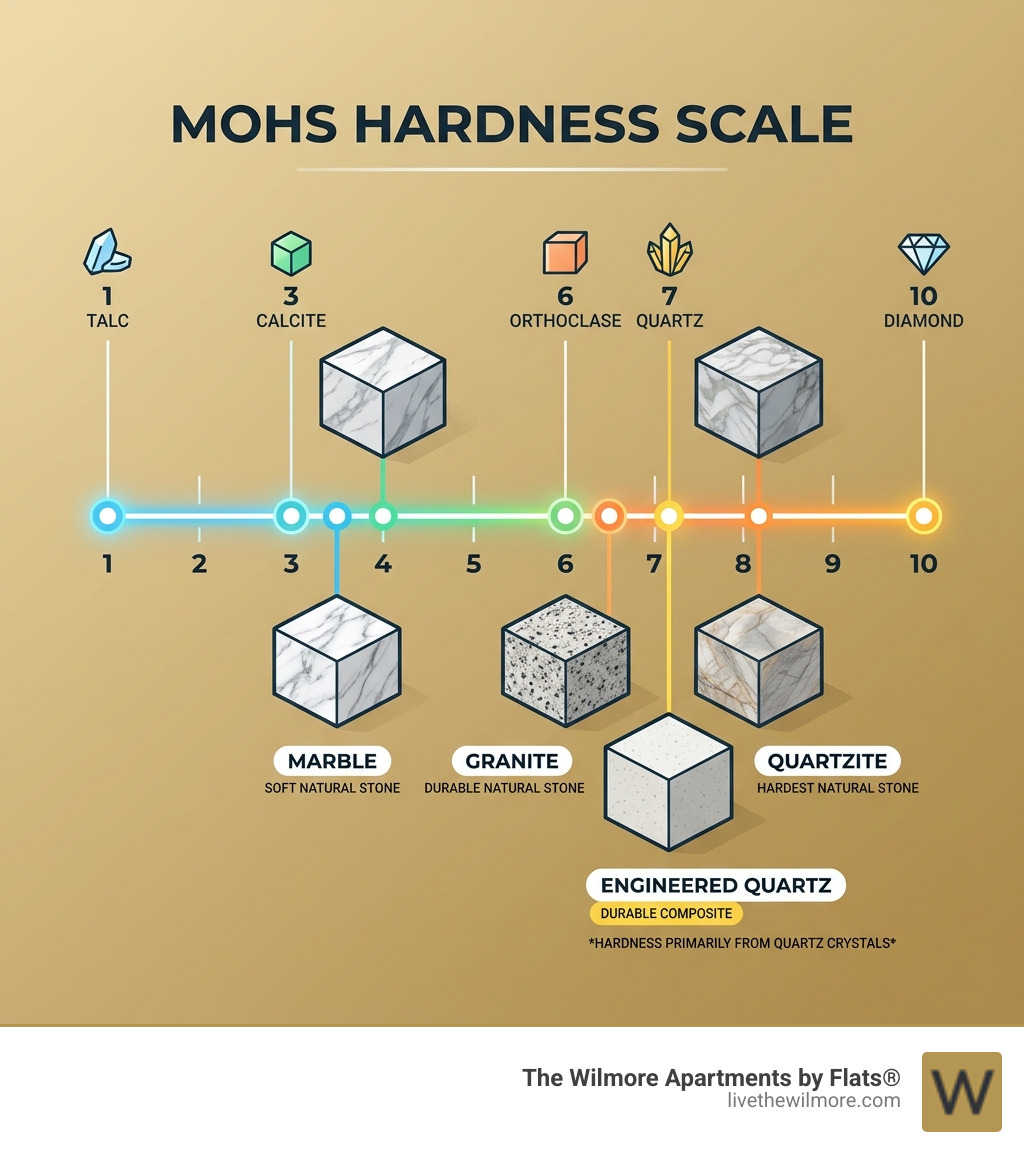
Marble remains the "gold standard" for sophistication. Varieties like Calacatta and Carrara are world-renowned for their crisp white backgrounds and dramatic, sweeping veins. While marble is a softer stone (ranking around 3-4 on the Mohs scale), its ability to stay cool makes it a favorite for bakers, and its aesthetic value is simply unmatched.
Granite, on the other hand, is the workhorse of the luxury world. It has remained a favorite for decades thanks to its incredible durability, and "exotic" granite varieties are highly coveted for their rarity. These slabs feature unique, swirling patterns that look more like abstract paintings than kitchen surfaces. A Granite Kitchen Island is often the first thing guests notice, providing a heat- and scratch-resistant surface that can literally last a lifetime with minimal care.
High-Performance Luxury Stone Countertops: Quartz and Quartzite
If you want the look of marble but the strength of granite, quartzite is your best friend. Not to be confused with quartz, quartzite is a natural metamorphic rock. It is incredibly hard—ranking 7 to 8 on the Mohs scale—making it more resistant to acids and scratches than almost any other natural surface. Varieties like Taj Mahal quartzite are highly sought after for their creamy, soft glow and incredible resilience.
Then there is engineered quartz. This is a modern-day marvel made by combining roughly 90-95% crushed natural quartz crystals with resins and pigments. The result? A completely non-porous surface that never needs to be sealed. It’s the perfect choice for busy Chicagoans who want a high-end look without the maintenance "homework."
Key Factors for Selecting Premium Surfaces
Choosing the right stone involves more than just picking a pretty color. We always recommend looking at the technical specifications to ensure the stone fits your lifestyle.
One of the most important factors is slab thickness. In luxury applications, a 3cm (roughly 1 1/4 inch) profile is the standard. It provides a more substantial, high-end look and offers better structural integrity for long spans or heavy appliances. For those seeking a more delicate or modern aesthetic, 2cm slabs are also available, often used for backsplashes or bathroom vanities.
Veining patterns are another critical consideration. "Book-matching"—where two adjacent slabs are sliced from the same block to create a mirror-image effect—is a hallmark of high-end design. It creates a stunning visual flow that makes the countertop feel like a custom-tailored piece of furniture. You can explore more about these features in our guide to Durable Countertop Options.
| Feature | Marble | Granite | Quartzite | Quartz |
|---|---|---|---|---|
| Heat Resistance | High | Excellent | Excellent | Moderate (use trivets) |
| Stain Resistance | Low (Porous) | Moderate | High | Excellent (Non-porous) |
| Acid Resistance | Low (Etches) | High | High | High |
| Annual Sealing | Required | Recommended | Recommended | Never |
Choosing the Right Finish
The finish of your stone completely changes its personality.
- Polished: This is the most popular choice. It offers a high-gloss, reflective sheen that makes colors "pop" and highlights the depth of the stone's natural crystals.
- Honed: This provides a matte, satin-like finish. It’s incredibly smooth to the touch and is excellent at hiding scratches or etching, making it a favorite for marble lovers.
- Leathered: A newer trend where the stone is brushed to create a textured, dimpled surface. It feels organic and hides fingerprints and water spots beautifully.
Design Trends for Luxury Stone Countertops in 2026
As we move through 2026, we are seeing a move toward "warm luxury." Cold, clinical grays are taking a backseat to stones with gold veining and creamy undertones. Materials like Calacatta Laza Oro quartz are trending because they offer that striking gold-on-white look that pairs beautifully with brushed brass fixtures.
Waterfall edges—where the stone continues vertically down the side of the cabinetry to the floor—remain a staple of Sleek Kitchen Design. We are also seeing more integrated sinks, where the sink is fabricated from the same stone as the countertop for a seamless, monolithic appearance.
Preserving the Beauty of Your Surfaces
A luxury countertop is a defining feature of the home, and like any high-end finish, it requires a bit of protection. For natural stones like marble, granite, and quartzite, sealing is the name of the game.
Most natural stones are porous to some degree. Without a sealer, liquids like red wine, oil, or coffee can seep into the stone and leave permanent stains. We recommend a professional-grade sealer applied at least once a year. Some high-end installers even offer lifetime warranties on their sealing services. Companies like Blue Pearl Stone emphasize that proper care is what keeps a stone looking brand new for decades.
Daily Care and Maintenance
You don't need a chemistry degree to clean your countertops. In fact, simpler is better. A soft microfiber cloth and a bit of mild dish soap mixed with warm water will handle 95% of daily messes.
The biggest "no-no" is using acidic or abrasive cleaners. Vinegar, lemon juice, and harsh bleach can "etch" the surface of marble and some quartzites, leaving dull spots that are difficult to remove. If you have a spill, especially something acidic like tomato sauce or orange juice, wipe it up immediately.
Avoiding Common Pitfalls
Even the toughest stones have their limits. "Thermal shock" occurs when a very hot pot is placed directly on a cool surface, causing the stone to crack. While granite and quartzite are heat-resistant, it’s always a good habit to use a trivet.
Similarly, never use your luxury stone as a cutting board. While you might not scratch a quartzite surface with a kitchen knife, you will almost certainly dull your knife instantly. For softer stones like marble, a knife can leave permanent scars.
Frequently Asked Questions about Luxury Surfaces
What factors define the selection of luxury stone?
The selection of a luxury stone is influenced by three main factors: material rarity, slab thickness, and the complexity of the design. A rare blue quartzite from Brazil offers a different aesthetic than a classic white marble. Additionally, custom edges (like a mitered edge) and specialized cutouts for sinks or cooktops enhance the bespoke nature of the installation.
How do luxury stone countertops differ from standard options?
Standard options are often thinner, mass-produced, and may have more visual "defects" or inconsistent patterns. Luxury stone is hand-selected for its unique veining and superior structural integrity. The sourcing is also more ethical and precise, ensuring that the stone you get is the highest "first-quality" grade available from the quarry.
Which stone is best for high-traffic kitchens?
For those who cook every day and don't want to worry about every drop of lemon juice, engineered quartz or quartzite are the winners. Quartz offers total consistency and stain resistance, while quartzite provides that authentic natural stone feel with nearly diamond-level hardness.
Conclusion
At The Wilmore, we understand that the details define the home. Located in the heart of Uptown Chicago, our residences are designed to blend the historic character of the neighborhood with the urban sophistication of modern living. We believe that high-end finishes, like Apartments with Quartz Countertops, are more than just a design choice—they are a commitment to quality and a better living experience.
Whether you are dreaming of a kitchen with dramatic waterfall edges or a bathroom with the soft glow of dolomite, choosing the right luxury stone is the first step toward a home that is as functional as it is beautiful. Stay stylish, Chicago!