


Key Factors in Deciding What Countertop Best for Apartment Kitchen
What countertop is best for an apartment kitchen? It depends on your priorities, but here's a quick breakdown of the top options:
| Material | Best For | Maintenance |
|---|---|---|
| Quartz | Durability, low upkeep, modern look | Very low — no sealing needed |
| Granite | Natural elegance, heat resistance | Low — seal every 10-15 years |
| Laminate | High-turnover units, fast installs | Very low — no sealing needed |
| Solid Surface | Seamless fit, easy repairs | Low — sand out minor damage |
| Tile | Retro style, heat resistance | Medium — grout needs attention |
For most apartment kitchens, quartz is the top choice — it's non-porous, scratch-resistant, and requires zero sealing. Laminate is the most practical pick when installation speed and simplicity matter most.
Choosing the right countertop for an apartment kitchen is harder than it looks. The space is small. The use is heavy. And the material needs to work for everyone who lives there — not just one person.
Unlike a single-family home, an apartment kitchen faces constant turnover, varied cooking habits, and real limits on what can be installed. Weight restrictions, narrow hallways, and building regulations all play a role — especially in older urban buildings.
The wrong choice means frequent repairs, unhappy residents, or a kitchen that just looks dated in listing photos. The right choice can do the opposite: make a unit feel polished, attract quality residents, and hold up for years without constant upkeep.
This guide walks through every major material — from quartz and granite to laminate and solid surface — so you can make a confident, informed decision.
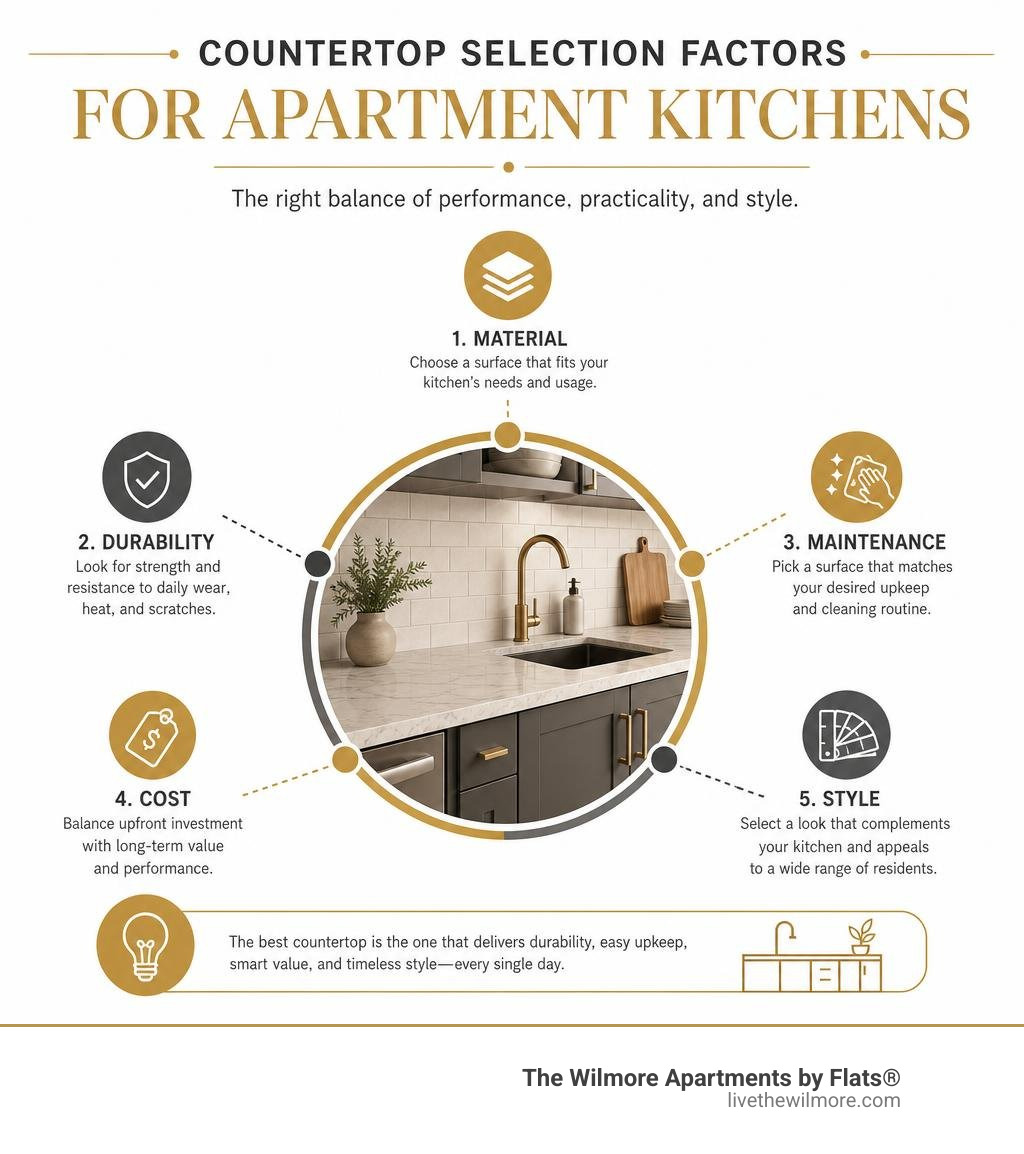
When we evaluate surfaces for multifamily spaces, we have to look through a different lens than a traditional homeowner would. A homeowner might prioritize a highly delicate, rare marble because they are willing to baby it. In an apartment setting, that strategy is a recipe for disaster.

To determine what countertop best for apartment kitchen installations, we must focus on three core pillars:
- Tenant Turnover and General Wear Resistance: Apartments experience higher turnover than single-family homes. Every time a new resident moves in, the kitchen is subjected to different cooking habits, cleaning styles, and levels of care. We need surfaces that can resist scratches from heavy cast-iron pans, stains from spilled red wine, and impacts from dropped mugs.
- Maintenance Requirements: If a material requires annual sealing, special chemical cleaners, or immediate spill management, it is bound to suffer. Residents want a low-maintenance lifestyle, and property managers need to minimize maintenance callbacks. Non-porous materials reduce the risk of mold, bacteria, and permanent stains.
- Longevity and Return on Investment (ROI): While some materials require a higher initial investment, their lifespan can extend up to 20 years or more. Choosing a material that lasts through dozens of lease cycles without needing replacement is key to maintaining high property standards.
Selecting the right balance of these factors ensures that the kitchen remains clean, beautiful, and functional for years to come. For a deeper dive into choosing long-lasting surfaces, explore our guide on Durable Countertop Options.
Comparing Top Countertop Materials for Multifamily Units
To make the best decision for your property, it helps to look at how the most popular materials stack up side-by-side in terms of performance, upkeep, and overall aesthetic appeal.
| Material | Scratch Resistance | Stain Resistance | Heat Resistance | Maintenance Level | Perceived Quality |
|---|---|---|---|---|---|
| Quartz | Exceptional | Exceptional | Moderate (up to 300°F) | None | High |
| Granite | High | Moderate (requires seal) | High | Moderate | High |
| Laminate | Moderate | High | Low | None | Moderate |
| Solid Surface | Moderate (repairable) | High | Low | Low | Moderate |
| Tile | High | Low (grout stains) | High | High | Moderate |
When modernizing multifamily properties, staying on top of design trends is just as important as selecting durable materials. Designers are increasingly moving toward clean, integrated spaces that feel open and bright. You can read more about these evolving preferences in the article on 7 Countertop Trends for Modern Multifamily Housing.
Quartz: The Premium Standard for Modern Rentals
Quartz has rapidly become the gold standard for modern apartments, and for good reason. It perfectly balances high-end visual appeal with virtually indestructible performance.
Unlike natural stone slabs, quartz is an engineered surface made of roughly 90% to 95% natural quartz crystals bound together with polymer resins and pigments. This manufacturing process makes it incredibly hard, rating a 7 on the Mohs hardness scale.
Because it is engineered, quartz is entirely non-porous. It completely resists liquids, meaning food coloring, coffee, and acidic juices will not stain it. It also holds an NSF food-safe rating, making it one of the most sanitary surfaces available for food preparation. For a closer look at why engineered stone is such a popular choice, check out our resource on Durable Quartz Countertops.
Granite: Natural Elegance and Heat Resistance
Granite remains a highly respected choice for high-end properties. Because it is a 100% natural stone, every single slab is completely unique, offering a level of character, depth, and organic veining that engineered materials try to mimic.
One of granite's greatest strengths is its incredible heat tolerance. Unlike quartz, which can suffer thermal shock or resin damage under extreme heat, granite can handle hot pots and pans placed directly on its surface.
However, granite is naturally porous. To prevent liquids and bacteria from penetrating the stone, it must be sealed. While some dense, dark granites only need sealing every 10 to 15 years, lighter varieties may require more frequent attention. In rental properties, it is best practice to handle this sealing process between residents to protect the stone from neglect. Learn more about the benefits of natural stone in our overview of Granite Countertop Benefits.
Laminate and Solid Surface: Practical Alternatives
For properties looking for adaptable design systems that still deliver a modern aesthetic, laminate and solid surface materials are excellent alternatives.
Modern laminate has come a long way from the dated, plastic-looking surfaces of the past. Today’s high-performance laminates feature realistic stone-look patterns, subtle wood-grain textures, and clean self-edge profiles that mimic the appearance of stone. They are lightweight, completely non-porous, and incredibly easy to clean. To learn how to make these adaptable surfaces look premium, read the Laminate Countertops Guide.
Solid surface countertops (often known by brand names like Corian) are composed of roughly one-third acrylic resin and two-thirds natural minerals. The standout feature of solid surface is its seamless installation. Seams can be chemically bonded to create a single, continuous surface that is highly hygienic. Additionally, because the material is consistent all the way through, minor scratches or burns can easily be sanded out by a professional.
Design and Installation Considerations in Urban Apartments
Choosing the right material is only half the battle. In urban environments like Cook County and Chicago, the physical realities of apartment buildings introduce unique challenges.
Space is often at a premium, and the layout of the building itself can dictate what materials are practical to install. When designing a kitchen, we must balance these physical constraints with aesthetic choices that make the space feel larger and more inviting. To see how these elements come together, explore our tips on Sleek Kitchen Design.
How Layout Constraints Influence What Countertop Best for Apartment Kitchen
In historic or pre-war Chicago buildings, getting materials into the unit can be a logistical puzzle. Narrow hallways, tight stairwells, and small elevators make transporting massive, heavy slabs of natural stone incredibly difficult—and sometimes impossible.
For walk-up buildings, lightweight materials like laminate or solid surface are much easier to transport and install. If quartz or granite is chosen, installers often have to cut the stone into smaller, manageable sections, which introduces more seams into the final layout.
Additionally, older cabinetry may not be structurally reinforced to handle the immense weight of thick, 3cm concrete or natural stone slabs without additional bracing. Understanding these building limitations early in the planning stage prevents costly installation delays. For creative ways to work around tight layouts, check out our Apartment Kitchen Ideas.
Color and Style Choices for What Countertop Best for Apartment Kitchen
In smaller apartment kitchens, color choices have a massive impact on the overall feel of the room. Light-colored countertops—such as soft whites, warm taupes, and light grays—reflect natural light, making compact kitchens feel significantly larger and more open.
Neutral palettes are also highly practical. They act as a blank canvas, allowing residents to personalize their space with their own decor without clashing with the countertops. Subtle marble-look patterns with gentle veining are particularly popular because they hide minor dust, smudges, and daily wear much better than solid, high-gloss dark surfaces. To explore premium style combinations, read our guide on High-End Kitchen Surfaces.
Frequently Asked Questions about Apartment Countertops
Which countertop material is easiest to maintain in a rental?
Engineered quartz is widely considered the easiest countertop material to maintain. Because it is non-porous, it does not require periodic sealing, waxing, or special pH-neutral cleaners. Daily cleanup simply requires warm water and mild soap. This low-maintenance profile makes it highly resilient against the unpredictable cooking and cleaning habits of different residents. The same low-maintenance benefits make quartz a popular choice for other areas of the home, such as a Quartz Bathroom Vanity.
How do countertop choices impact property appeal?
Premium stone surfaces like quartz and granite significantly boost a property's perceived quality and resident appeal. When prospective residents tour a kitchen, the countertops are often the first thing they notice. High-quality stone surfaces signal that the property has been well-maintained and built with durable, long-lasting materials. To learn more about how premium finishes elevate a home's appeal, read our article on Luxury Countertop Materials.
Can damaged apartment countertops be easily repaired?
Yes, but it depends heavily on the material. Solid surface countertops are the easiest to repair because minor scratches, stains, and cigarette burns can be sanded out using fine-grit abrasive pads. Acrylic resin surfaces can also be seamlessly patched if a piece chips off. For minor wear on other surfaces, professional refinishing is a great way to restore shine without a full replacement. For local repair strategies, check out these Countertop Resurfacing Ideas for Chicago Kitchens.
Conclusion
Finding the perfect kitchen surface comes down to balancing durability, style, and the unique physical constraints of apartment living. While laminate and solid surfaces offer practical, lightweight solutions, quartz remains the ultimate choice for those seeking a premium, worry-free kitchen experience.
At The Wilmore, located in the vibrant Uptown neighborhood of Chicago, we believe that your home should combine modern design with effortless urban convenience. That is why our modern residences feature premium finishes that stand up to daily life while looking absolutely stunning.
Ready to experience the perfect blend of style and convenience in Cook County? Explore our beautiful, pet-friendly Apartments with Quartz Countertops and find your next home today.