


Refinish or Replace? What You Need to Know About Countertop Refinishing
Countertop refinishing is the process of restoring an existing countertop surface with a fresh coating — instead of tearing it out and starting over. It works on laminate, tile, cultured marble, solid surface, and more.
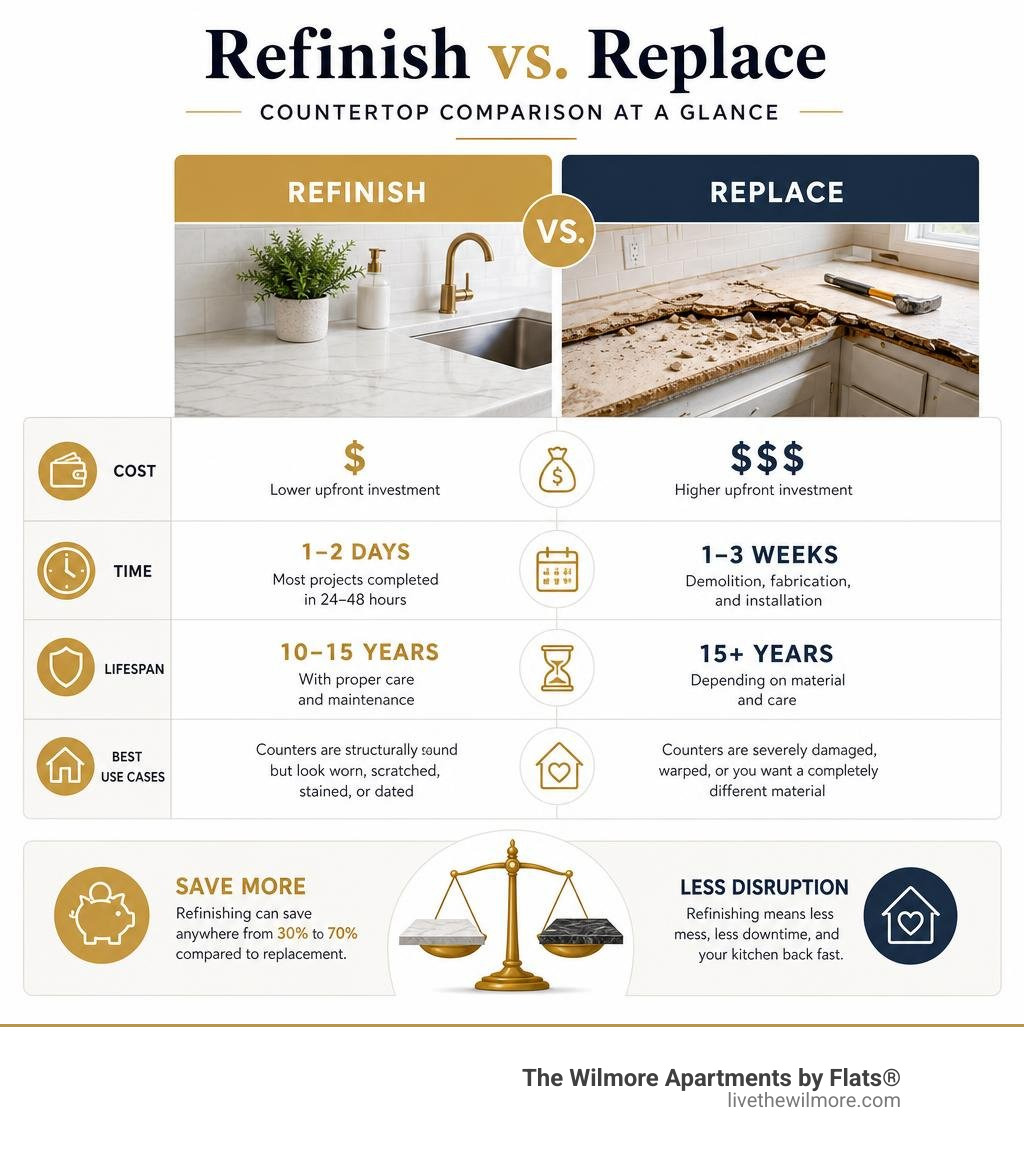
Quick answer: Should you refinish or replace?
- Refinish if your countertop is structurally sound but looks worn, scratched, stained, or dated
- Refinish if you want a faster, lower-disruption update (most projects take 1-2 days)
- Replace if the countertop is severely damaged, warped, or you want to upgrade to a completely different material
- Replace if the surface has been refinished multiple times and can no longer hold a new coating
A properly done job can extend the life of your countertops by 10 to 15 years, making it an excellent alternative to a full replacement.
Here's the core idea: countertops take a beating. Daily use leaves scratches, stains, and dull spots that make even a decent kitchen look tired. Full replacement means demolition, disposal, and weeks of disruption. Refinishing skips all of that. A new coating goes right over the existing surface, and you're back to using your kitchen within 24 to 48 hours.
This guide covers everything — how the process works, which materials qualify, DIY versus professional options, finish choices, and how to keep a refinished surface looking great for years.
What is Countertop Refinishing?
At its core, countertop refinishing (often called countertop reglazing or surface restoration) is a multi-step process that applies a hard, incredibly durable acrylic or polymer coating over your existing countertops. Rather than sending your current counters to a landfill, we clean, repair, prime, and coat the existing surface so it looks and performs like new.
Think of it as a high-tech face-lift for your kitchen or bathroom. Instead of undergoing demolition, installing new slabs, and managing complex plumbing hookups, the existing structure remains completely intact. The magic lies in the specialized chemical bonding agents and acrylic urethanes used during the application. These products fuse to the original material at a molecular level, creating a non-porous surface that resists water, stains, and daily wear.
For renters or property owners looking to update a space without major structural changes, knowing how to cover old apartment countertops is a game-changer. It allows you to bypass the headache of full construction while achieving a premium look. When planning your next kitchen update, exploring various kitchen countertop ideas often reveals that you do not need to acquire brand-new materials to get a high-end, modern aesthetic.
The Benefits of Countertop Refinishing
When planning a kitchen refresh, weighing your options carefully is essential. Choosing to refinish rather than replace offers several distinct advantages:
- Preservation of Existing Layout: Refinishing allows you to keep your current kitchen layout completely intact. There is no need to worry about matching paint on surrounding walls or replacing adjacent tiles that might be damaged during a full demolition.
- Minimal Disruption and Mess: A full replacement can put your kitchen out of commission for weeks. Refinishing projects are usually completed in just one to two days, and the surface is typically ready for light duty within 24 to 36 hours.
- Eco-Friendly Waste Reduction: Renovation debris contributes significantly to landfills. By choosing to preserve your existing apartment countertop structure, you participate in a sustainable "reduce and reuse" cycle.
- Stunning Variety: Modern refinishing technology allows you to mimic premium stone, quartz, or granite patterns in dozens of colors and gloss levels.
- Enhanced Durability: The specialized topcoats seal porous grout lines on tile counters and cover scratches on laminate, creating highly durable countertop options that stand up to daily life.
To get the most out of these benefits, many turn to professional reglazing services to ensure a flawless, long-lasting bond that looks indistinguishable from a brand-new installation.
Compatible Materials for Resurfacing
Not every surface is a candidate for refinishing, but the vast majority of common kitchen and bathroom materials can be successfully restored. Here is a breakdown of compatible materials:
- Laminate (Formica & Wilsonart): This is the most common candidate for refinishing. Over time, laminate can peel, chip, or fade. Refinishing bonds beautifully to laminate, though it can realistically only be refinished twice over its lifespan before a full replacement becomes necessary.
- Cultured Marble: Often found in bathroom vanities, cultured marble can develop hairline cracks and yellow over time. Refinishing restores its bright, clean appearance.
- Ceramic Tile: Refinishing tile countertops also seals the grout lines, making them waterproof and much easier to clean.
- Solid Surface (Corian): These acrylic-based surfaces can be sanded down and recoated to erase years of scratches and minor burn marks.
Before deciding on a path forward, it is helpful to consult a best countertop materials guide to understand how your current material behaves. For instance, if you are working with alternative materials like epoxy resin countertops, the preparation and coating steps will differ slightly to ensure the new layer adheres perfectly.
Step-by-Step Guide to Resurfacing Countertops
Achieving a smooth, factory-like finish requires strict adherence to a multi-step preparation and application process. Skipping even one detail can lead to peeling or bubbling down the road.
Here is a look at how the process breaks down:
- Preparation and Protection: The surrounding walls, cabinets, sink fixtures, and floors are carefully masked off using plastic sheeting and painter's tape to protect them from overspray.
- Surface Cleaning and Repair: The countertop is scrubbed with specialized heavy-duty cleaners to remove grease, wax, and soap scum. Any deep scratches, chips, or knife marks are filled with polyester fillers and sanded completely flat.
- Etching or Sanding: The surface is sanded or chemically etched to create a microscopic texture (or "profile") that allows the new coatings to grip the old material.
- Applying the Bonding Agent: A high-performance, proprietary bonding agent is applied to ensure a permanent molecular link between the old surface and the new topcoat.
- Spraying the Primer and Base Color: Multiple layers of specialized primer and base color are applied using a high-volume, low-pressure (HVLP) spray system.
- Adding the Pattern (Optional): If a stone or granite look is desired, multi-colored flecks are sprayed over the base coat.
- Topcoat Application: A final clear acrylic urethane topcoat (available in matte, satin, or high-gloss) is applied to seal the design and provide a durable, water-resistant barrier.
- Curing and Detailing: The masking material is removed, and the surface is left to cure. After curing, any minor surface imperfections are polished out.
| Feature | DIY Refinishing Kits | Professional Coatings |
|---|---|---|
| Application Tool | Foam rollers and brushes | HVLP precision spray systems |
| Bonding Technology | Standard epoxy or acrylic paint | Proprietary molecular bonding agents |
| Cure Time | 3 to 7 days | 24 to 48 hours (or instant UV cure) |
| Durability | Moderate (prone to chipping if abused) | High (closely mimics factory laminate) |
| Lifespan | 2 to 5 years | 10 to 15+ years |
Professional Countertop Refinishing Process
When you hire professionals, they bring industrial-grade equipment and specialized chemicals that are not available to the public. For example, they utilize advanced acid-free chemical etching and proprietary bonding agents that form an unbreakable connection.
During the application of the acrylic urethane topcoat, professionals set up heavy-duty exhaust fans and ventilation systems. This is crucial because high-performance coatings release strong solvent odors during the spraying process. By venting the air directly outside, they ensure indoor air quality remains clear. Some advanced companies even use instant ultraviolet (UV) light curing systems, allowing the kitchen to be put back into service the exact same day.
To achieve a flawless look, utilizing specialized resurfacing techniques is highly recommended, as it eliminates the visible brush and roller marks common with standard retail paint kits.
DIY vs. Professional Countertop Refinishing
For hands-on homeowners, DIY countertop refinishing kits (often based on epoxy or specialized acrylic paints) are readily available at retail hardware stores.
While a DIY project can be incredibly satisfying, it does come with trade-offs. DIY kits require meticulous sanding and a dust-free environment. Without professional spray equipment, you may end up with subtle roller marks or uneven textures. Additionally, consumer-grade kits typically require a much longer curing time—sometimes up to a full week before you can place heavy appliances back on the surface.
If you are working with high-end kitchen surfaces, the precision of professional application is usually worth it to preserve the premium feel of your home.
Design, Colors, and Finish Options
Refinishing does not mean you are stuck with a plain, solid color. Modern coatings offer an incredible range of design options to match any home style:
- Faux Stone and Granite: Multi-flecked coatings can mimic the depth, veining, and texture of natural stone, granite, or quartz.
- Solid Modern Tones: From crisp, clean whites to deep charcoal grays and dramatic blacks, solid colors provide a sleek, minimalist aesthetic.
- Gloss Levels: You can customize the final sheen to suit your taste, choosing from a soft matte, a classic satin, or a brilliant high-gloss finish.
Choosing the right look can completely transform your space. For inspiration on pairing your newly finished counters with other upscale design elements, check out our guide on luxury stone countertops. Whether you prefer a traditional look or a sleek kitchen design, the finish options available today ensure your counters will complement your cabinetry and backsplashes beautifully.
Maintenance and Care for Longevity
To ensure your newly refinished countertops last for 10 to 15 years, treat them with the same care you would give a brand-new laminate or solid-surface counter.
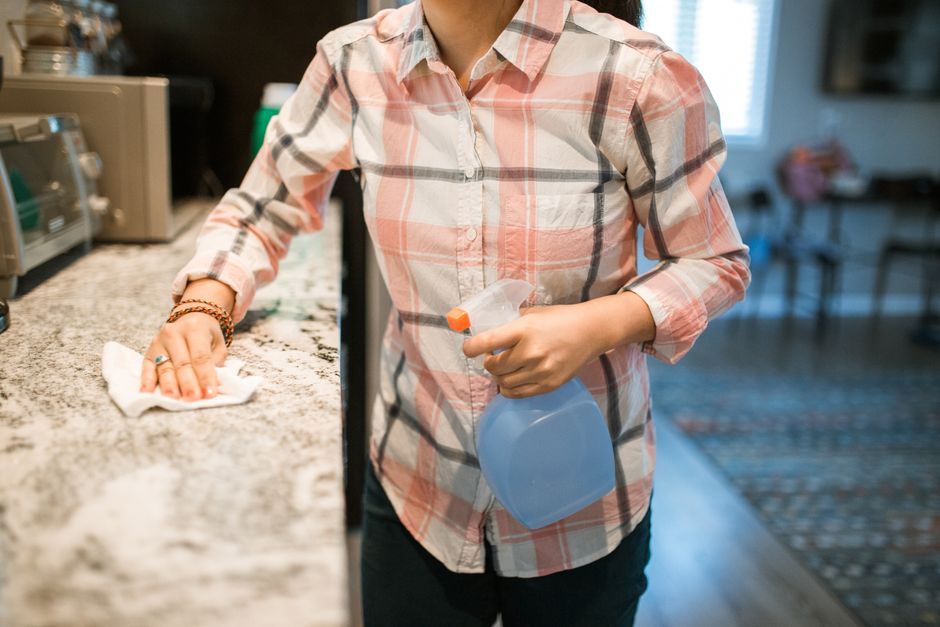
Follow these simple rules to maximize their lifespan:
- Avoid Abrasive Cleaners: Never use steel wool, scouring pads, or abrasive powders. Instead, clean the surface with warm water, mild dish soap, and a soft microfiber cloth. Avoid products containing bleach, ammonia, or harsh acids.
- Use Cutting Boards: Do not chop or slice food directly on the refinished surface. Sharp knives can cut through the protective topcoat, leaving scratches that can let moisture seep in.
- Protect from Heat: Always use trivets, hot pads, or silicone mats under hot pans, crockpots, or toaster ovens. Extreme heat can scorch, discolor, or delaminate the acrylic coating.
- Wipe Up Spills Quickly: While the topcoat is water and stain-resistant, leaving standing water or highly pigmented liquids (like red wine, coffee, or mustard) on the surface for hours can eventually cause staining or dulling.
Frequently Asked Questions about Countertop Refinishing
How long does a refinished countertop last?
With proper care and basic maintenance, a professionally refinished countertop can easily last 10 to 15 years. Because the bonding agents fuse the new coating to the original surface at a molecular level, you do not have to worry about the material peeling or bubbling under normal household conditions.
Is there a strong odor during the refinishing process?
Yes. The high-performance acrylic urethanes used in professional refinishing contain solvents that create a strong paint-like odor during application. Professionals use specialized ventilation fans to exhaust these fumes out of the home. The majority of the odor will dissipate within 24 to 48 hours as the surface cures.
Can refinishing repair deep scratches or burn marks?
Absolutely. Part of the preparation process involves repairing surface damage. Technicians use specialized acrylic or polyester fillers to patch deep scratches, chips, knife marks, and burn marks. Once filled and sanded flat, the repair becomes completely invisible under the new topcoat.
Conclusion
Countertop refinishing is a brilliant, resource-conscious way to elevate your kitchen or bathroom without the stress, mess, and waste of a full demolition. By choosing to restore instead of replace, you can enjoy a fresh, modern cooking space in just a couple of days.
If you are looking for a home that already features beautiful, modern design, we invite you to explore our community. At The Wilmore, located in the vibrant Uptown Chicago neighborhood, we blend modern convenience with upscale living. Our apartments feature stunning finishes designed to make your daily routine feel like a retreat.
To see what premium living looks like, explore our apartments with quartz countertops and find your perfect home today!