


Choosing the Best Apartment Countertops for Durability and Style
When you are upgrading a rental property, choosing the right apartment countertops is one of the most critical decisions you will make. The perfect surface must balance modern style with the strength to survive daily use.
If you want a quick answer on how the top materials compare for multi-family spaces, here is the short version:
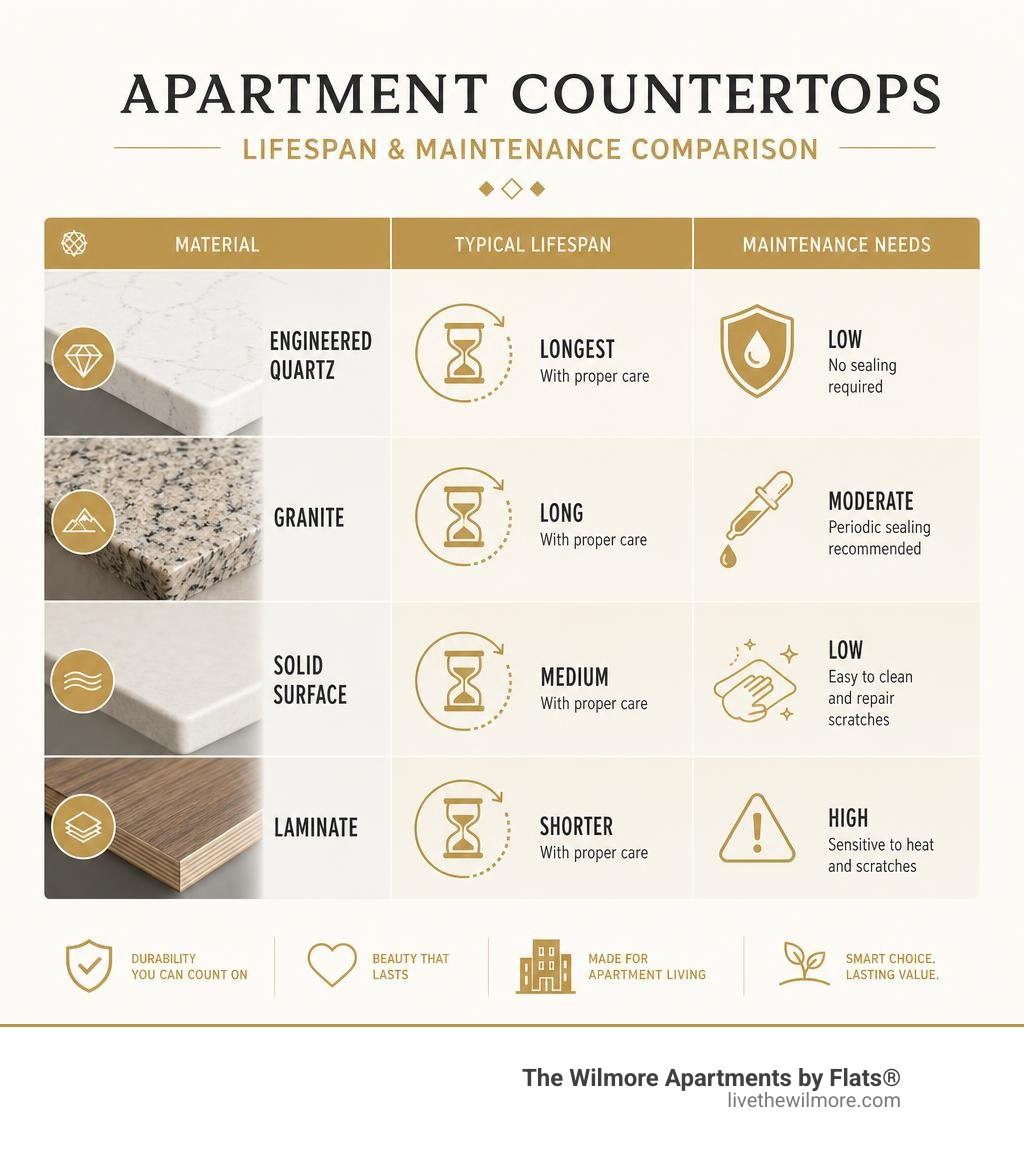
- Engineered Quartz: The gold standard. It is highly durable, completely non-porous, and never needs to be sealed.
- Granite: A classic natural stone option. It resists heat and scratches well but requires periodic sealing to prevent stains.
- Solid Surface: A seamless, mid-range material that is easy to repair if scratched, though it is sensitive to hot pans.
- Laminate: An option that offers a wide variety of patterns, but it is easily damaged by heat and sharp knives.
Selecting the right surface involves weighing long-term durability and performance. In busy multi-family buildings, choosing a low-maintenance material protects your investment and keeps kitchens looking beautiful year after year.

When designing or upgrading modern multi-family spaces in Uptown, Chicago, the kitchen serves as the ultimate focal point. Finding the perfect balance between robust durability and high-end style is essential. Selecting the right surface requires an understanding of how different materials handle the daily wear and tear of multi-family living.
To make an informed decision, it is helpful to explore What Countertop Best for Apartment Kitchen setups, as this choice directly impacts both daily maintenance and long-term property appeal. The right material must resist scratches, stains, and impact while elevating the overall aesthetic of the home.
Why Quartz is the Leading Choice for Apartment Countertops
Engineered quartz has quickly become the undisputed champion of modern kitchens. According to the National Kitchen and Bath Association, quartz is the top-selling material for kitchen surfaces, specified in more than 60% of professional kitchen projects.
This engineered stone is composed of roughly 90% to 95% crushed natural quartz crystals bound together with high-quality polymer resins. This manufacturing process gives quartz a Mohs hardness rating of 7, making it harder than natural granite and highly resistant to structural chips and scratches.
For multi-family properties, the true magic of quartz lies in its non-porous structure. Because the resin binders fill every microscopic void, the material is naturally resistant to bacteria, mold, and deep stains. It requires absolutely no sealing, making it an incredibly low-maintenance option for busy households.
To dive deeper into these advantages, you can read our Quartz Countertop Benefits Complete Guide or learn more about specifying Durable Quartz Countertops for your next upgrade.
Granite and Natural Stone Options
While engineered materials dominate the market, natural stone continues to hold a special place in high-end design. Granite remains a designer favorite due to its unique, organic patterns and excellent heat resistance. Unlike quartz, which can suffer surface damage from extreme heat due to its resin content, natural granite easily tolerates hot pans straight from the stove.
However, natural stone behaves differently depending on its geological makeup. For instance, darker-colored granite is generally denser and less permeable than lighter varieties, making it naturally more resistant to moisture and staining.
Other natural stones, such as quartzite, offer a highly sought-after aesthetic that mimics the dramatic veining of marble but with much higher durability. Marble itself is prized for its cool surface temperature—making it a classic choice for baking and pastry-making—but its highly porous nature and vulnerability to acid etching make it a high-maintenance option for rental spaces.
To understand how natural stone fits into premium designs, explore the Granite Countertop Benefits and our guide on Luxury Stone Countertops.
Alternative Materials for Multi-Family Units
For properties where alternative materials fit the design goals, solid surface, laminate, and butcher block are common considerations. Solid surface countertops are made from acrylic or polyester resins mixed with natural pigments. They are completely seamless and non-porous, allowing for integrated sinks. While they scratch relatively easily, those scratches can be professionally buffed out.
Modern laminate has improved significantly in design, offering realistic stone and wood grain patterns. While it provides an alternative entry point, it remains susceptible to water damage at the seams and cannot be repaired if scorched or cut.
Butcher block countertops, typically crafted from maple, cherry, or red oak, bring incredible warmth to a kitchen. However, they require consistent upkeep, including professional oiling every six months to prevent drying and cracking.
For those looking for creative DIY or custom finishes, exploring Epoxy Resin Countertops can also reveal unique, high-gloss design alternatives.
Comparing Top Countertop Materials for Rental Properties
To help property managers and owners evaluate their options, we have compiled a direct comparison of how the most popular materials perform across key criteria in multi-family settings. Choosing the correct surface involves a careful look at long-term performance, as outlined in the Best Countertop Materials Guide 2026.
| Material | Durability | Maintenance Level | Heat Resistance | Sealing Required? | Estimated Lifespan |
|---|---|---|---|---|---|
| Engineered Quartz | Excellent | Very Low | Moderate (Use Trivets) | No | 30+ Years |
| Granite | Excellent | Moderate | High | Yes (Annually) | 30+ Years |
| Quartzite | Excellent | Moderate | High | Yes (Annually) | 30+ Years |
| Solid Surface | Moderate | Low | Low | No | 15–20 Years |
| Laminate | Low | Low | Low | No | 5–7 Years |
| Butcher Block | Moderate | High | Moderate | No (Requires Oil) | 10–15 Years |
| Marble | Low | High | High | Yes (Every 6 Months) | 20+ Years |
Maintenance and Care for Apartment Countertops
The daily upkeep of kitchen surfaces plays a massive role in preserving their beauty and structural integrity. For natural stone surfaces like granite and quartzite, annual sealing is essential to keep liquids from penetrating the porous stone. Marble is even more demanding, often requiring sealing every six months to guard against common acidic spills like lemon juice, wine, and coffee.
Engineered quartz simplifies this routine entirely. Because it is non-porous, it never requires sealing. Daily cleaning requires nothing more than warm water and mild dish soap.
For properties dealing with older, worn surfaces, understanding How to Cover Old Apartment Countertop installations can provide temporary aesthetic upgrades, though investing in Durable Countertop Options remains the best path for long-term wear resistance.
Long-Term Value and Resale Appeal
Investing in high-quality kitchen surfaces does more than just simplify maintenance—it dramatically enhances the property's market appeal. Modern residents prioritize clean, premium finishes. Upgrading to stone or engineered quartz elevates the entire home, making it stand out in competitive urban markets.
Using premium materials like quartz or quartzite on high-visibility surfaces creates a powerful first impression during tours. These surfaces retain their polished look through multiple move-in cycles, minimizing the need for costly turn-week repairs.
To learn more about maximizing your property's visual appeal, explore our resources on High-End Kitchen Surfaces and Luxury Countertop Materials.
Layout Optimization and Structural Considerations for Multi-Family Buildings

In urban multi-family buildings, space is often at a premium. Designing a kitchen requires smart space planning to ensure the layout remains highly functional. Every square inch of counter space must be optimized for food preparation, cooking, and cleaning.
According to professional multi-family design guides, such as the Countertops for Multi-Family Housing | SlabWise resource, standardizing countertop templates across identical floor plans can streamline the entire installation process.
Maximizing Prep Space and Storage
In smaller apartment kitchens, utilizing efficient layouts like galley or U-shaped configurations helps maximize workflow. To keep countertops clear of clutter, incorporating vertical storage solutions—such as floating shelves, magnetic knife strips, and wall-mounted spice racks—is highly effective.
When planning the layout, ensuring proper clearance around major appliances is crucial. Designers recommend maintaining at least 12 to 15 inches of clear counter space on either side of a cooktop or range to ensure safe food handling.
Integrating multi-purpose appliances also frees up valuable workspace. For those managing compact layouts, referencing an Apartment Countertop planning guide or gathering fresh Kitchen Countertop Ideas can help create an exceptionally functional workspace. Additionally, specialized resources like the Apartment Countertop Dishwasher Guide 2026 offer smart tips for integrating appliances without sacrificing prep space.
Weight Restrictions and Building Logistics
One often overlooked aspect of selecting apartment countertops is the structural weight of the material, especially in high-rise residential buildings. Natural stone slabs are incredibly heavy:
- 3cm Granite Slabs: Weigh approximately 18 to 20 pounds per square foot.
- 3cm Quartz Slabs: Weigh approximately 15 to 18 pounds per square foot.
In large-scale high-rise developments, transporting dozens of heavy stone slabs requires careful logistical coordination. Elevators must have the weight capacity to handle the load, and building hallways must accommodate the transport of large, rigid pieces.
Before finalizing a heavy natural stone specification, it is critical to consult with building management regarding structural load limits and delivery logistics, as highlighted in the Chicago Kitchen Countertops 2026: Quartz, Quartzite & Costs guide.
Sourcing and Tariff Impacts in 2026
In 2026, global trade policies and import tariffs continue to play a major role in material procurement. Many imported natural stones and engineered quartz slabs coming from international quarries face import tariffs of 25% or more. These tariffs can add unexpected expenses to material costs, impacting overall project planning.
To mitigate these risks, many developers and property owners are shifting toward domestic sourcing. Specifying quartz brands manufactured entirely within the United States eliminates tariff exposure, ensuring more predictable lead times and stable project costs.
Understanding these procurement dynamics, as discussed in the Quartz Countertops Columbus, OH | Impact Countertops guide, is essential for keeping multi-family renovation projects on schedule and within scope.
Frequently Asked Questions
What is the most durable countertop material for a rental unit?
Engineered quartz is widely considered the most durable material for rental units. Its blend of natural quartz and polymer resins creates a surface that is highly resistant to scratches, chips, and stains. Because it is completely non-porous, it handles heavy daily use without requiring specialized cleaning or protective sealants.
Do quartz countertops require regular sealing?
No, engineered quartz countertops never require sealing. The manufacturing process uses resin binders that completely seal the material, rendering it non-porous. This is a major advantage over natural stones like granite, marble, and quartzite, which must be sealed regularly to prevent staining and moisture absorption.
How do building weight limits affect stone countertop selection?
Heavy natural stone slabs, particularly 3cm granite or marble, can place significant structural demand on a building's flooring and cabinetry. In high-rise buildings, transport logistics—such as elevator weight capacities and tight stairwells—can also limit the size and thickness of the slabs you can install. In these cases, lighter engineered quartz or thinner slab profiles are often preferred.
Conclusion
Selecting the perfect apartment countertops requires balancing style, durability, and practical maintenance. For modern residential buildings in Cook County, engineered quartz stands out as the premier choice, offering a sophisticated look with virtually effortless upkeep.
For those seeking an exceptional living experience in Uptown Chicago, IL, The Wilmore offers beautifully designed homes that blend historic charm with modern convenience. Our luxury residences feature high-end finishes, including sophisticated kitchens designed to elevate your daily routine.
To explore our available floor plans and see our stunning finishes firsthand, discover our Apartments with Quartz Countertops and find your perfect home in the heart of Uptown Chicago today.